How to Weave a Cucumber
A thesis project
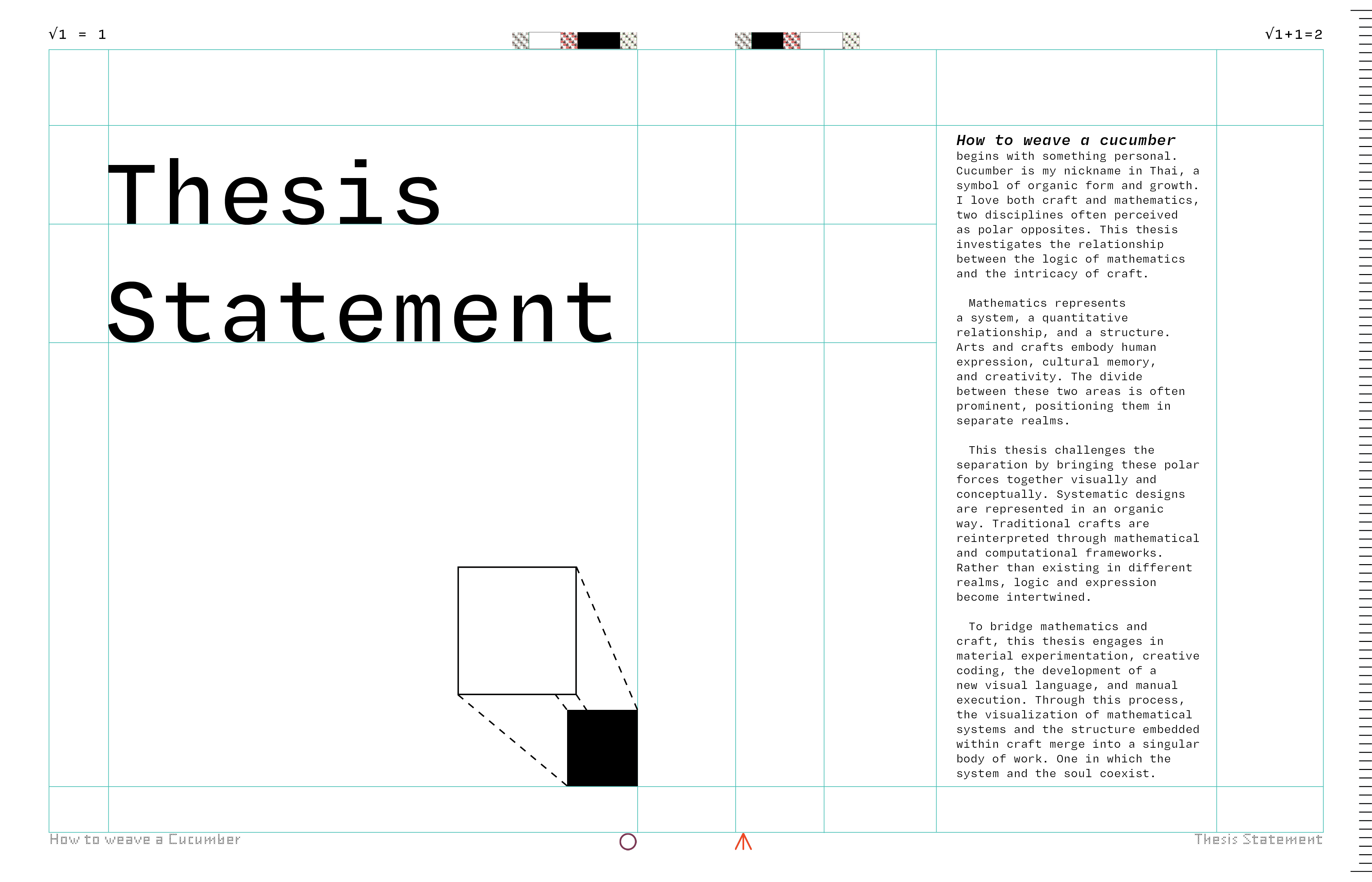
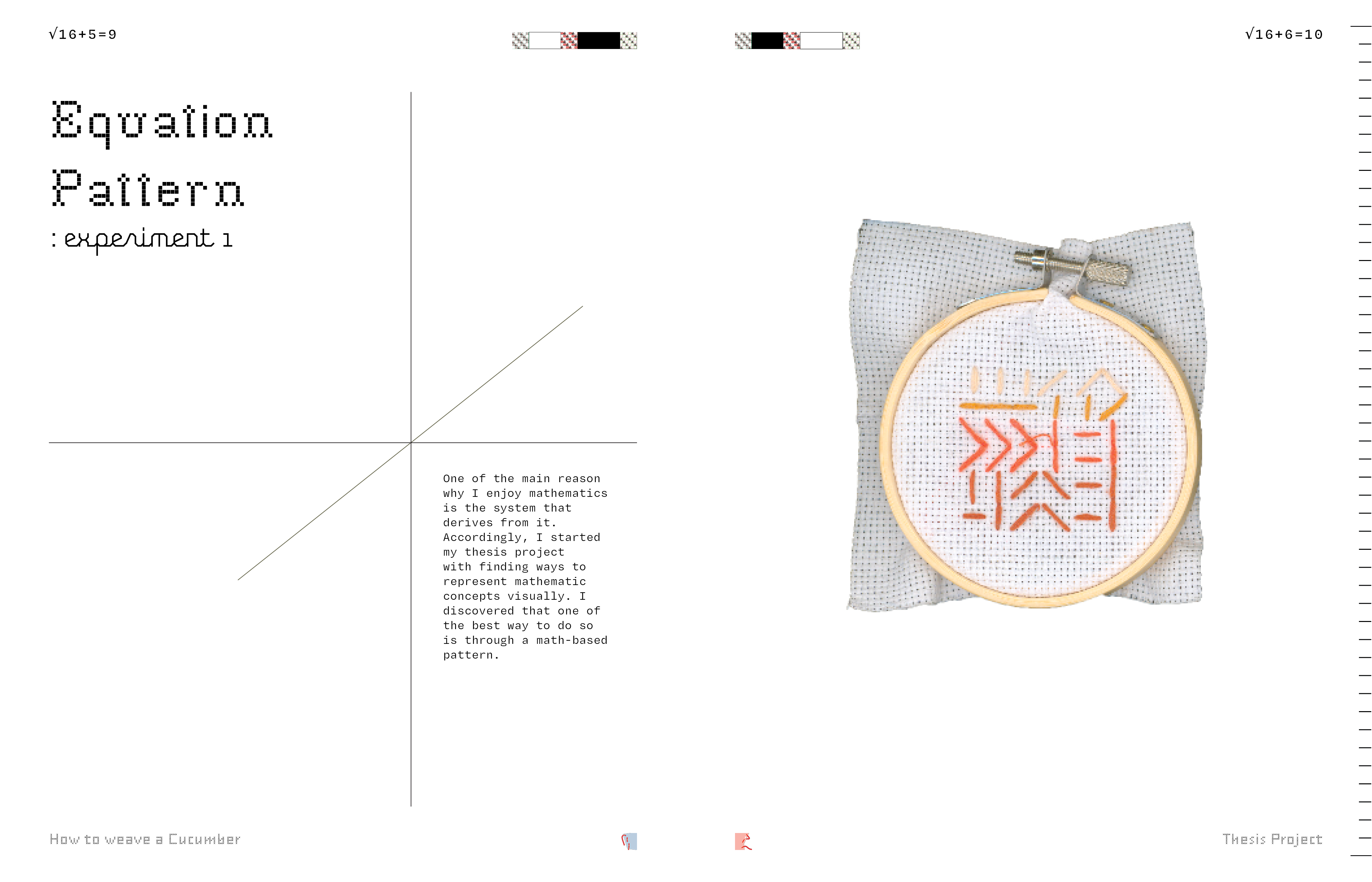
How to weave a cucumber begins with something personal. Cucumber is my nickname in Thai — a symbol of organic form and growth. This thesis investigates the relationship between the logic of mathematics and the intricacy of craft, two disciplines often perceived as polar opposites. Through material experimentation, creative coding, and manual execution, systematic designs are represented in organic ways and traditional crafts are reinterpreted through mathematical frameworks. Logic and expression become intertwined. The system and the soul coexist.
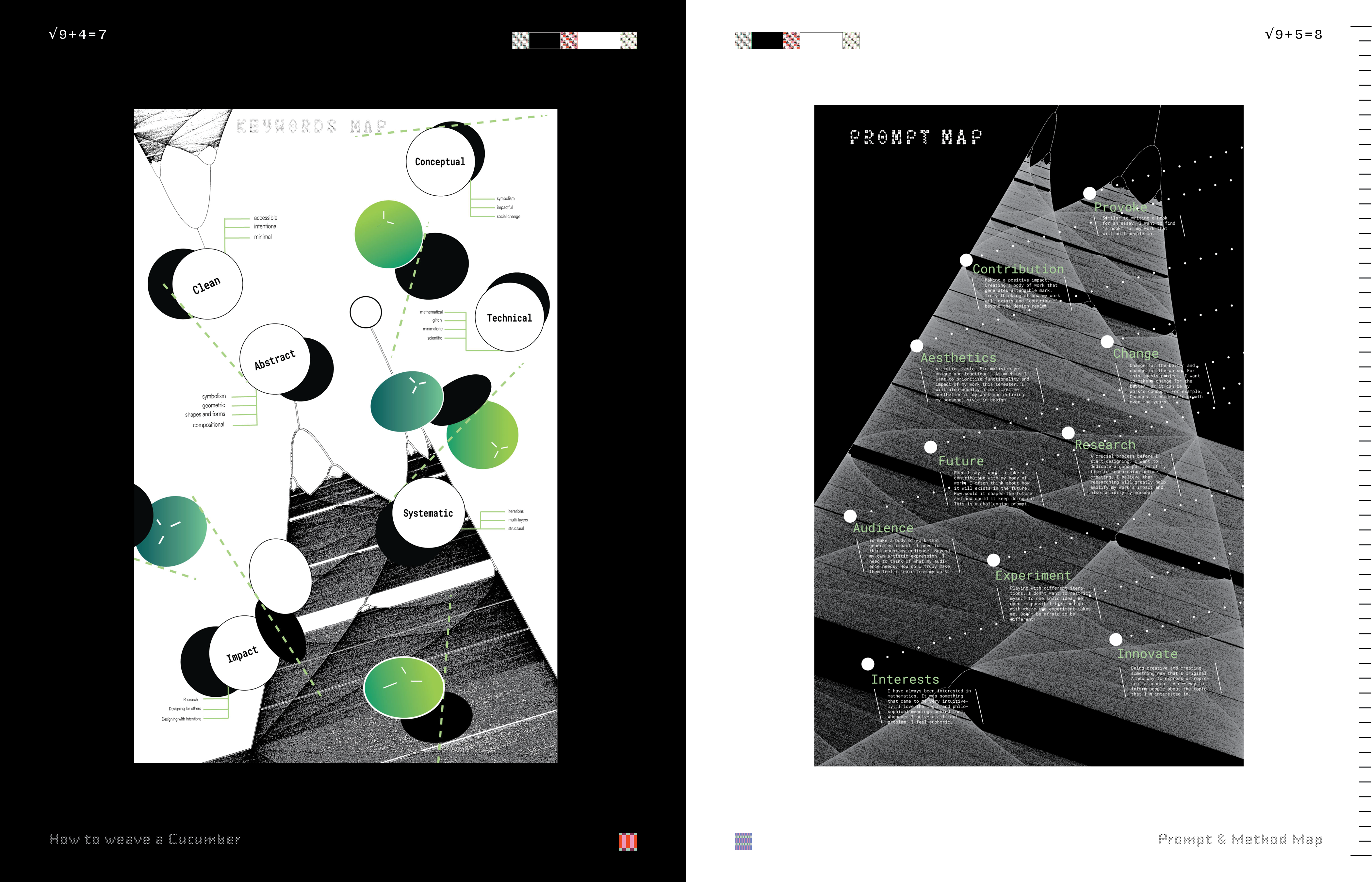
Method + Prompt Map
A map of the keywords and prompts that guided the project.
Research + Sketches
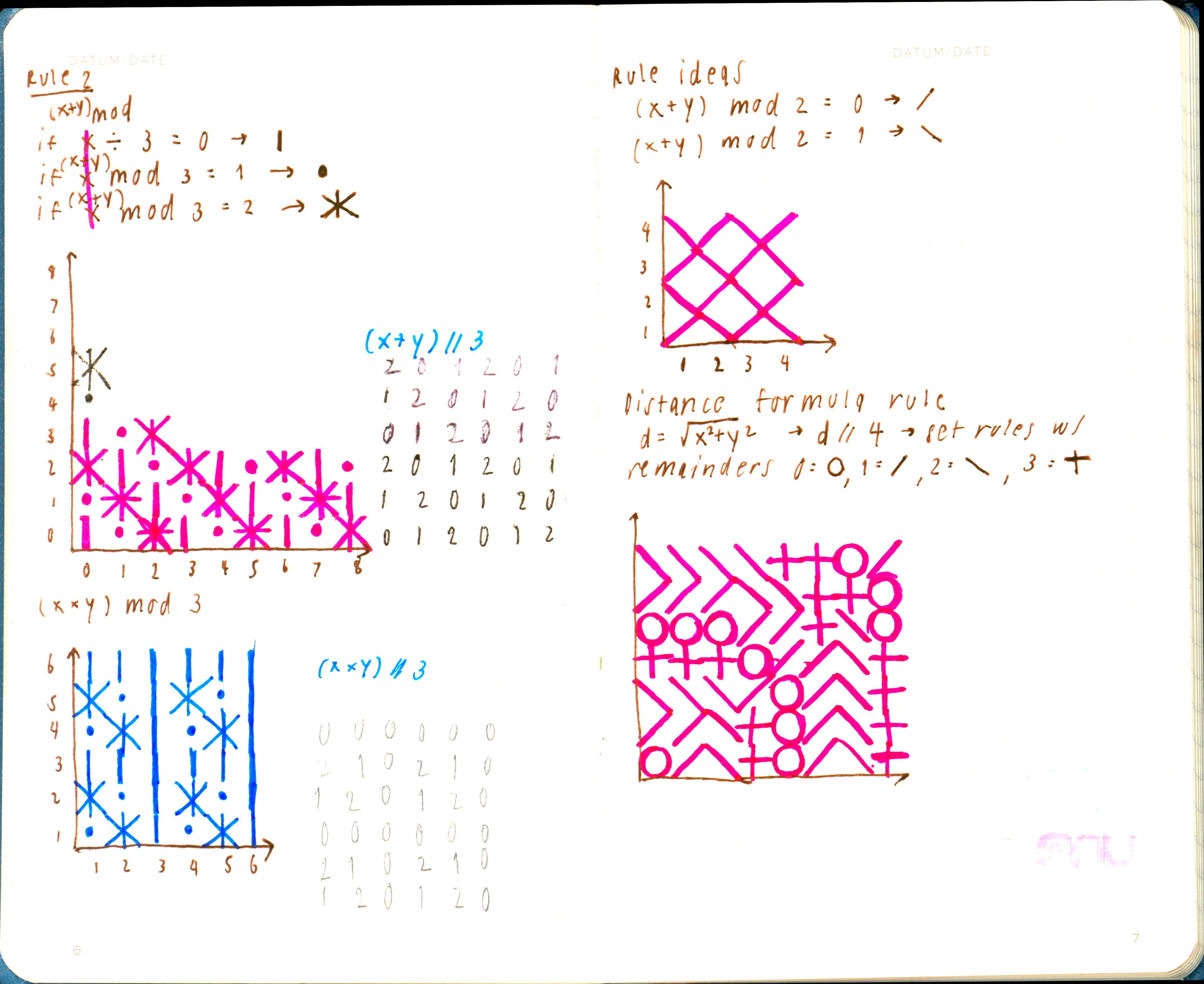
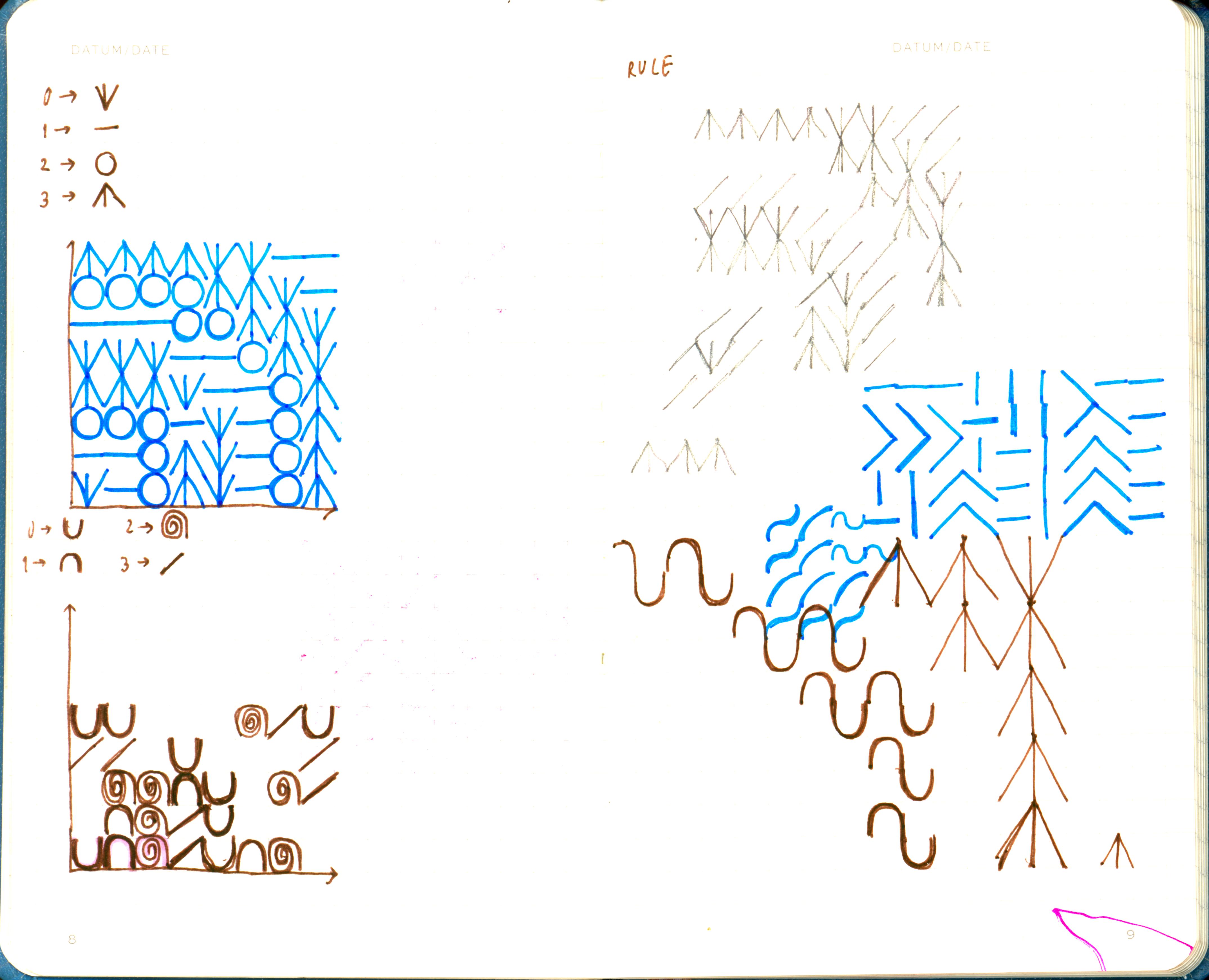
Early notebook sketches, testing how equations could turn into grid patterns.
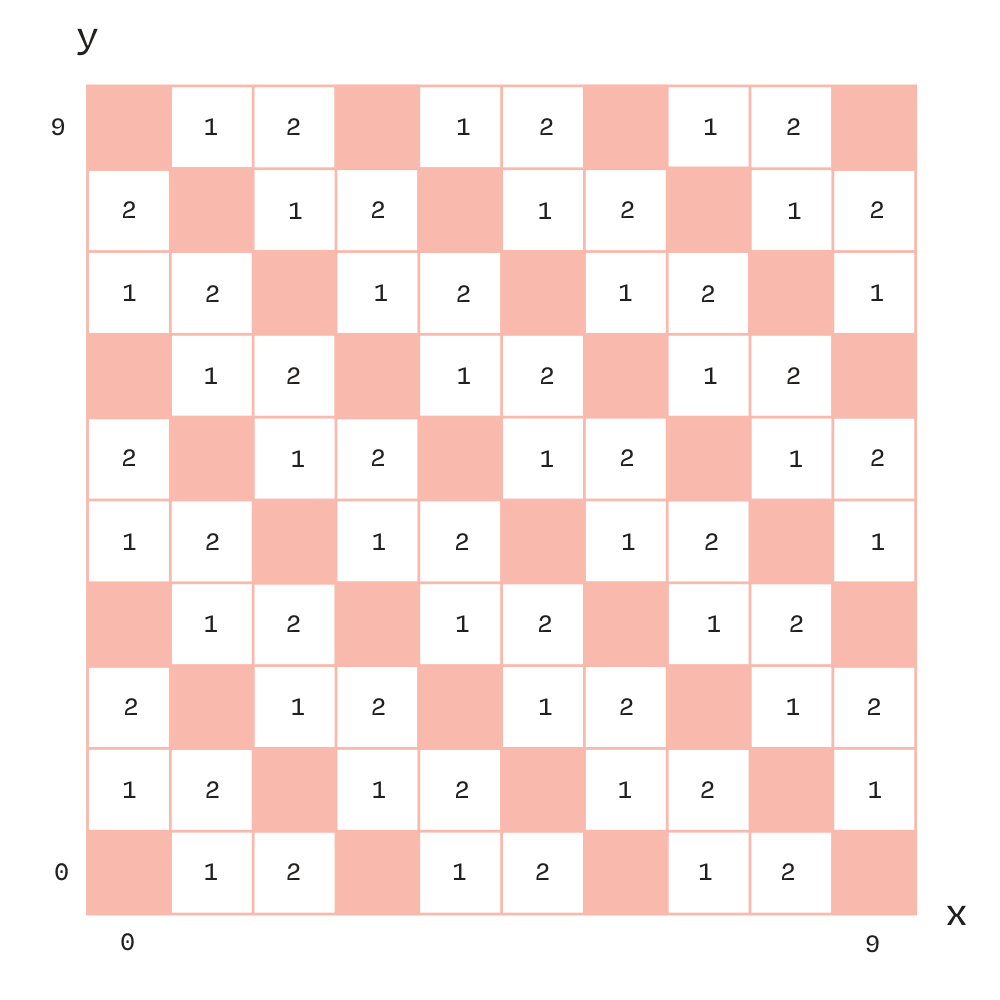
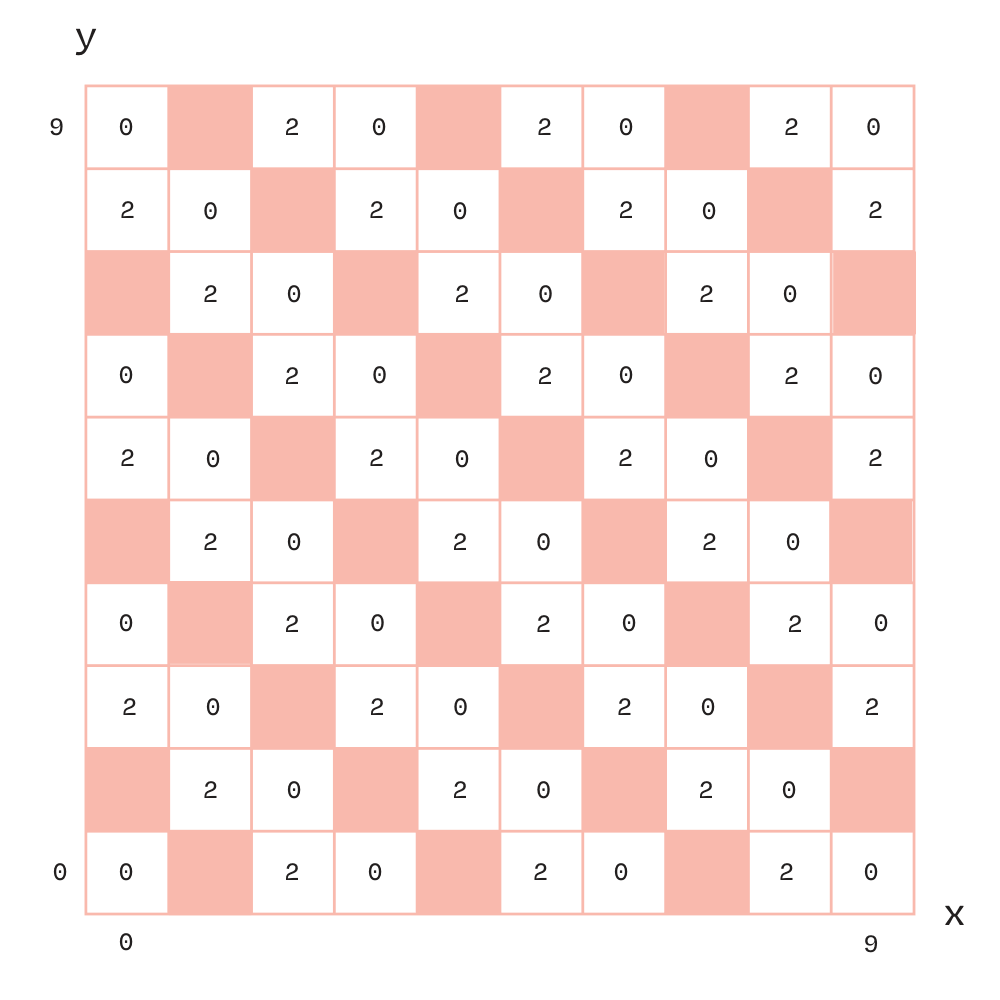
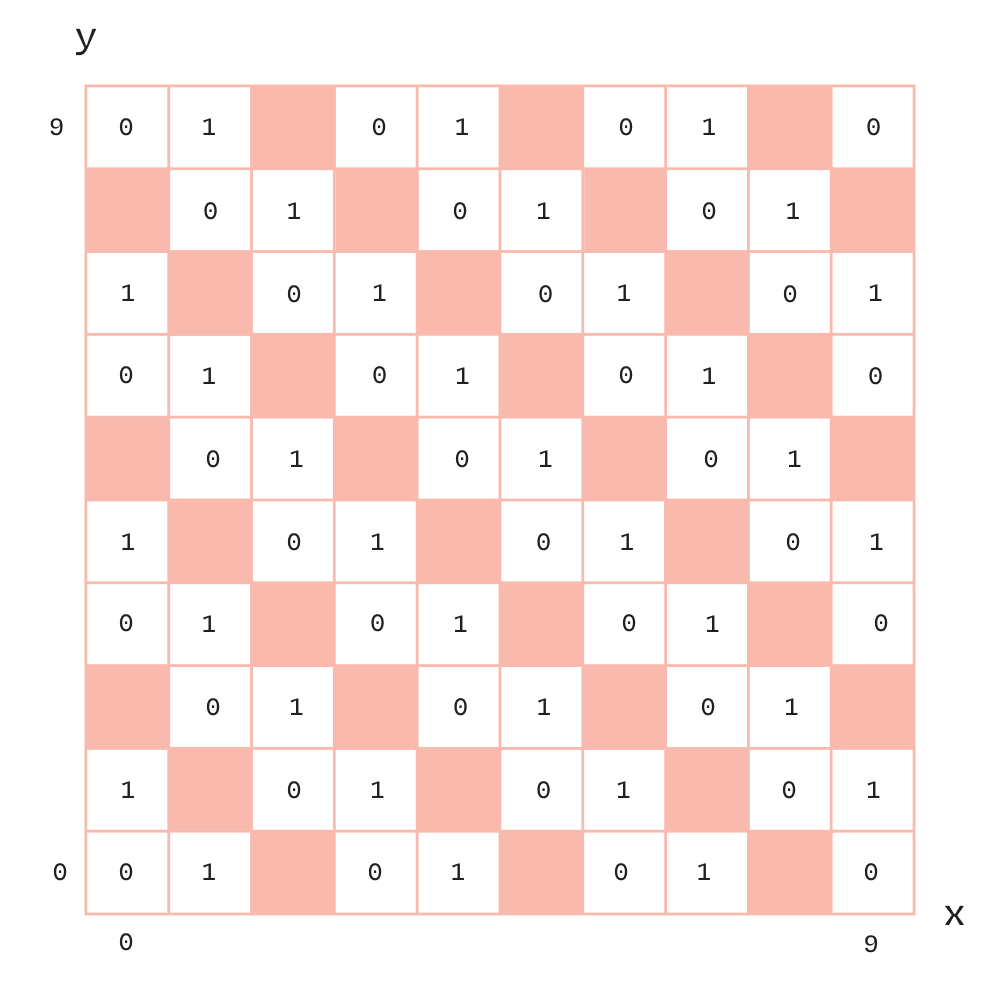
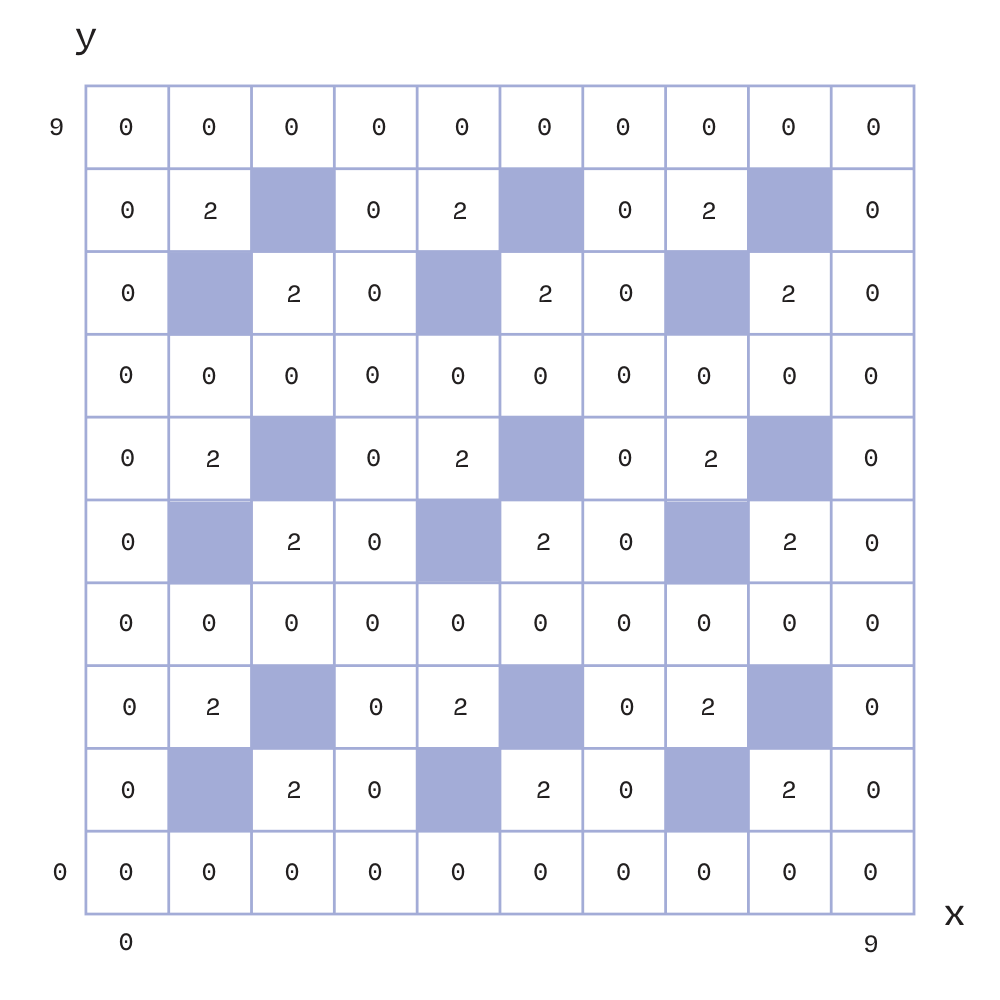
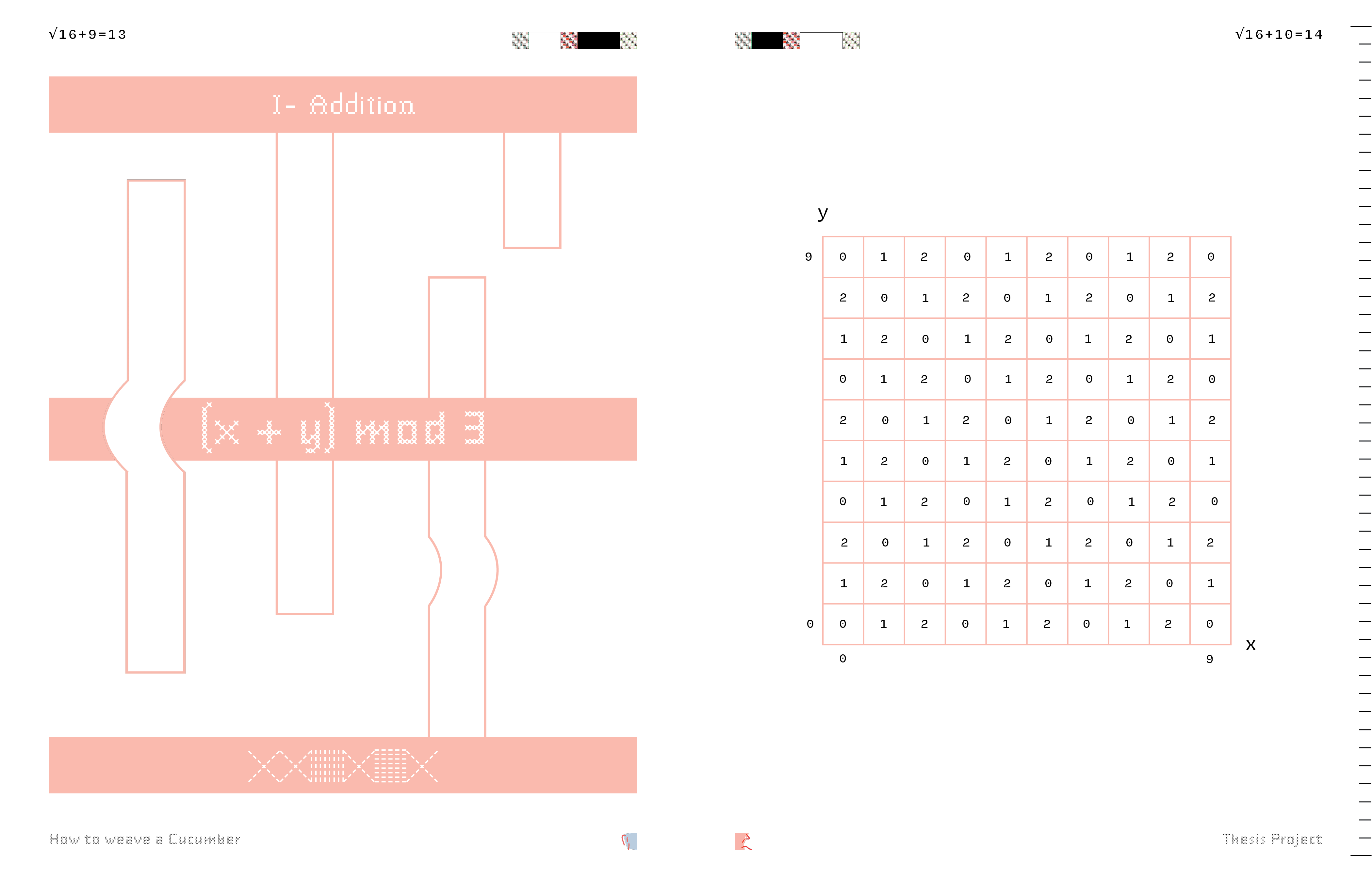
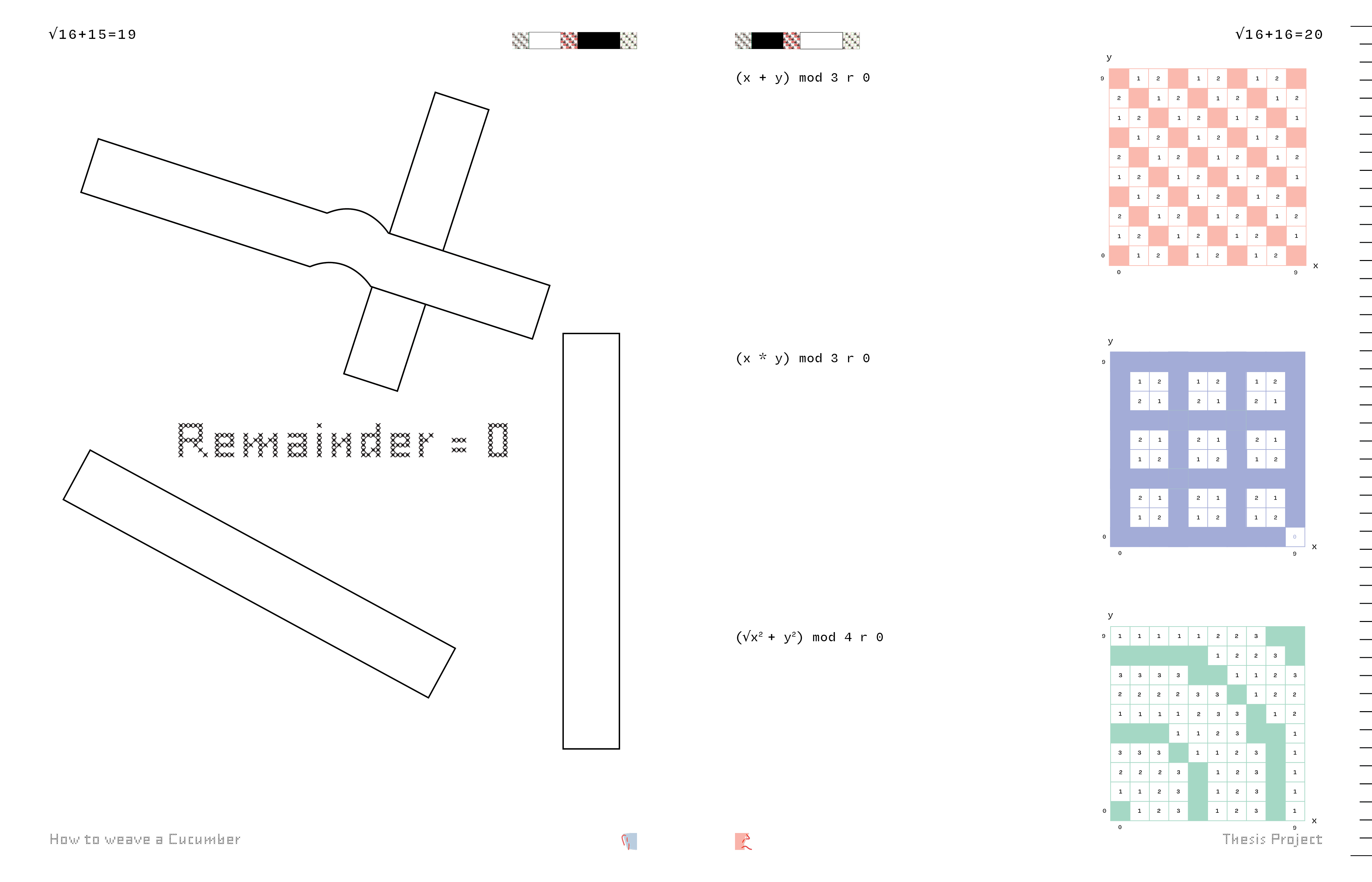
Addition — (x + y) mod 3
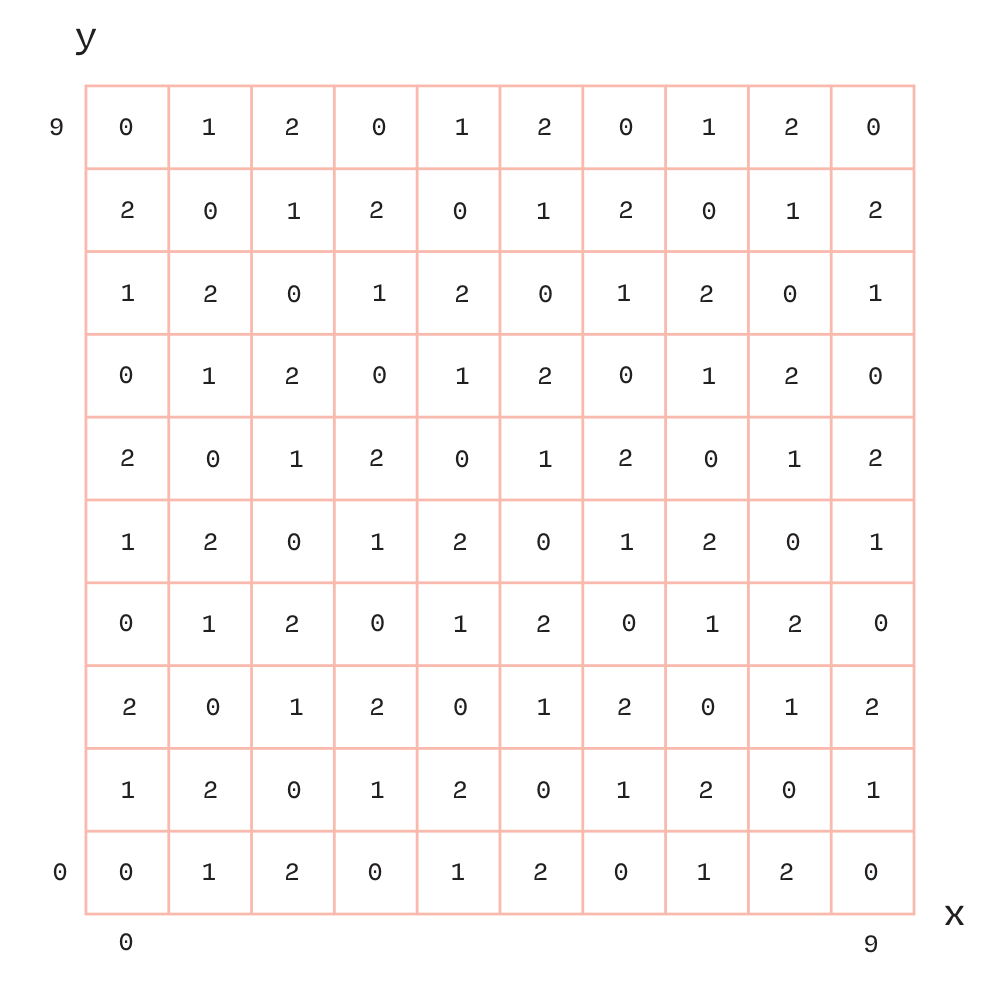
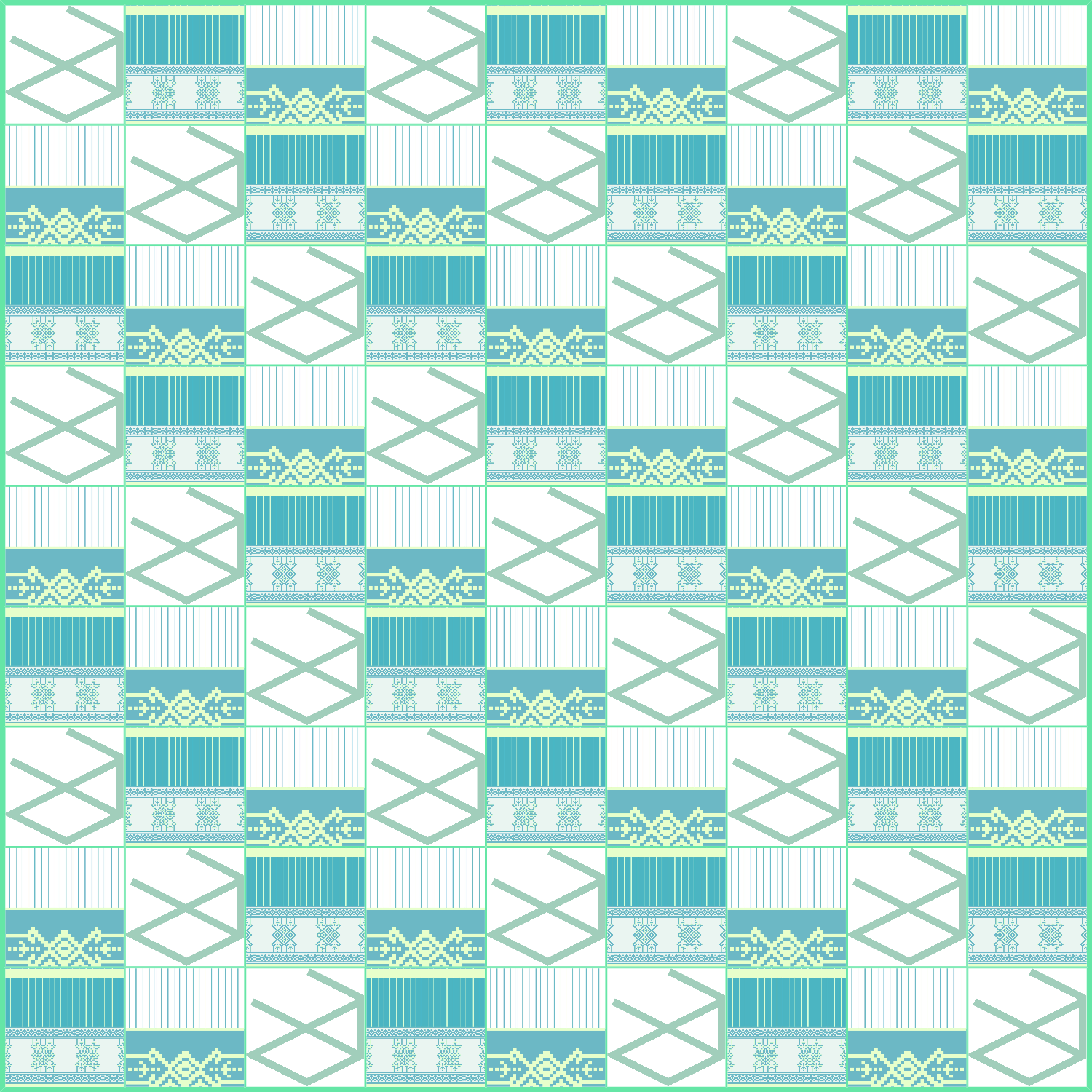
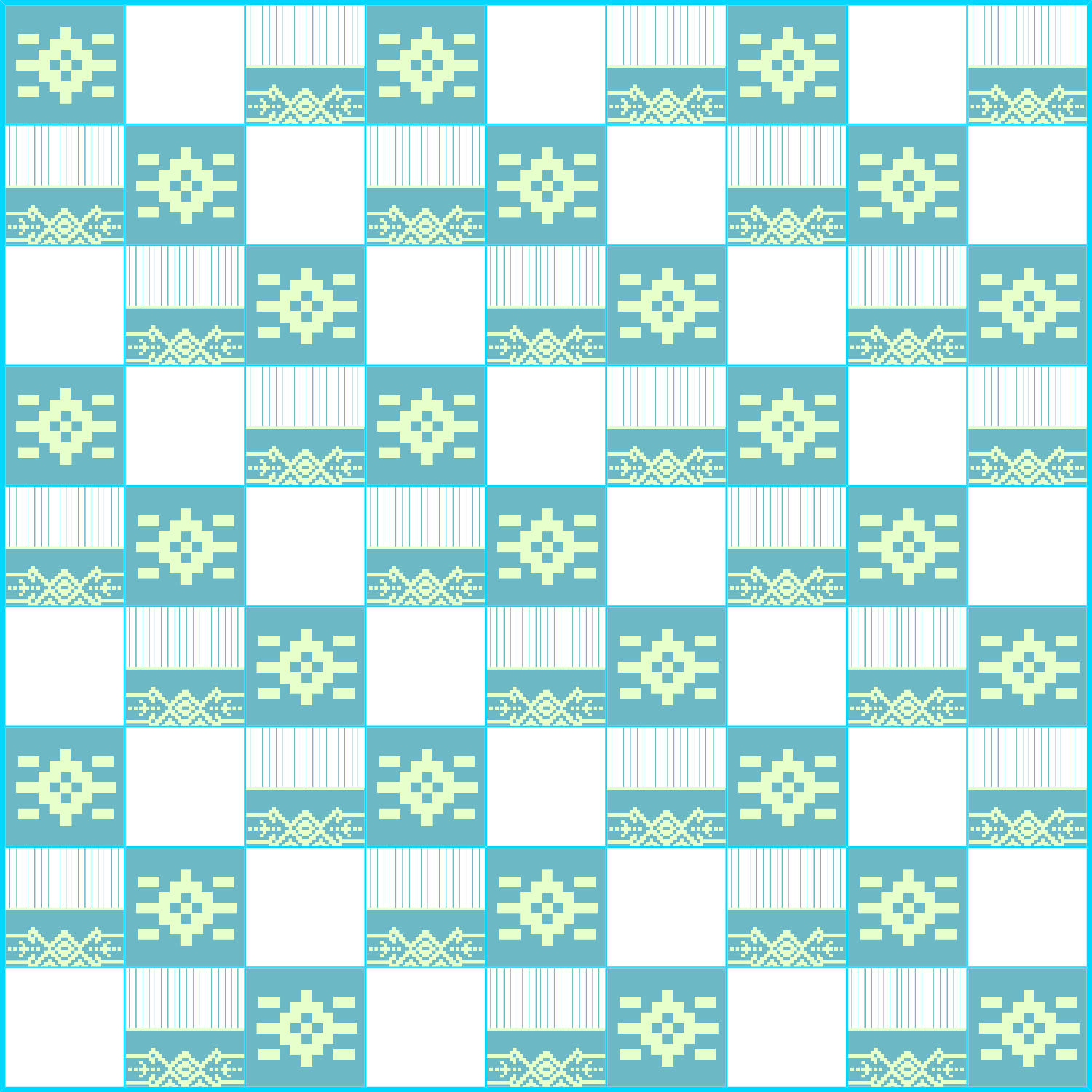
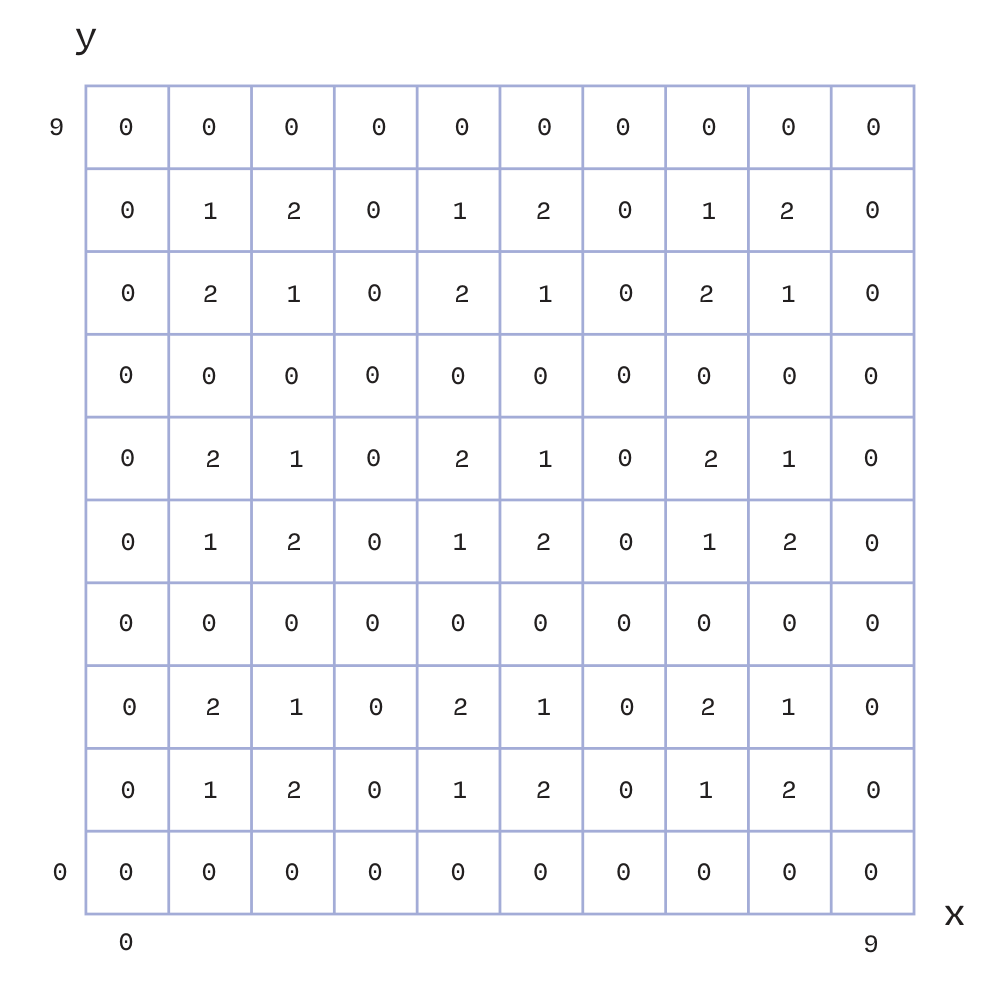
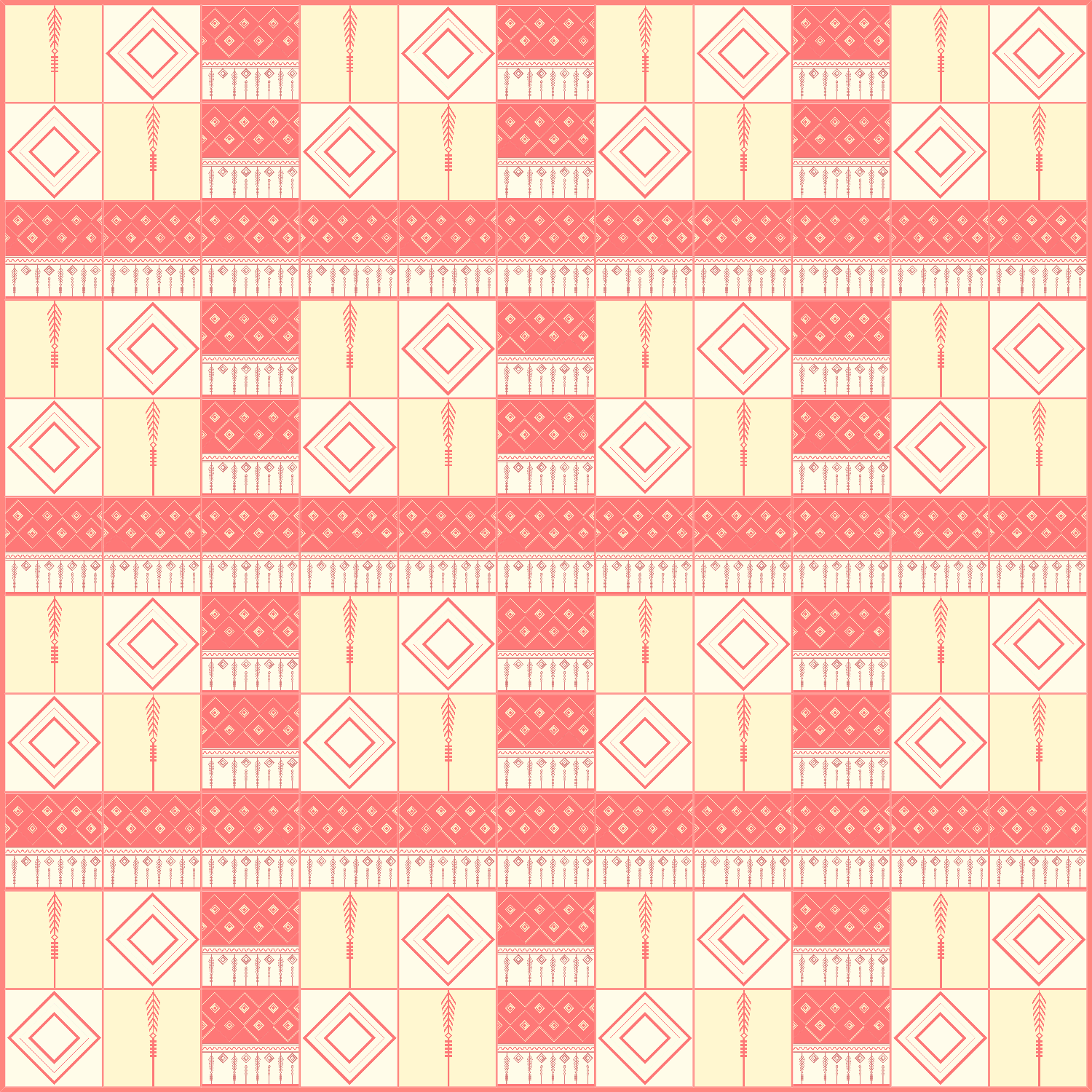
Every cell in the grid gets a value from its coordinates: (x + y) mod 3. Each remainder (0, 1 or 2) is given its own motif, and together the motifs build the pattern.
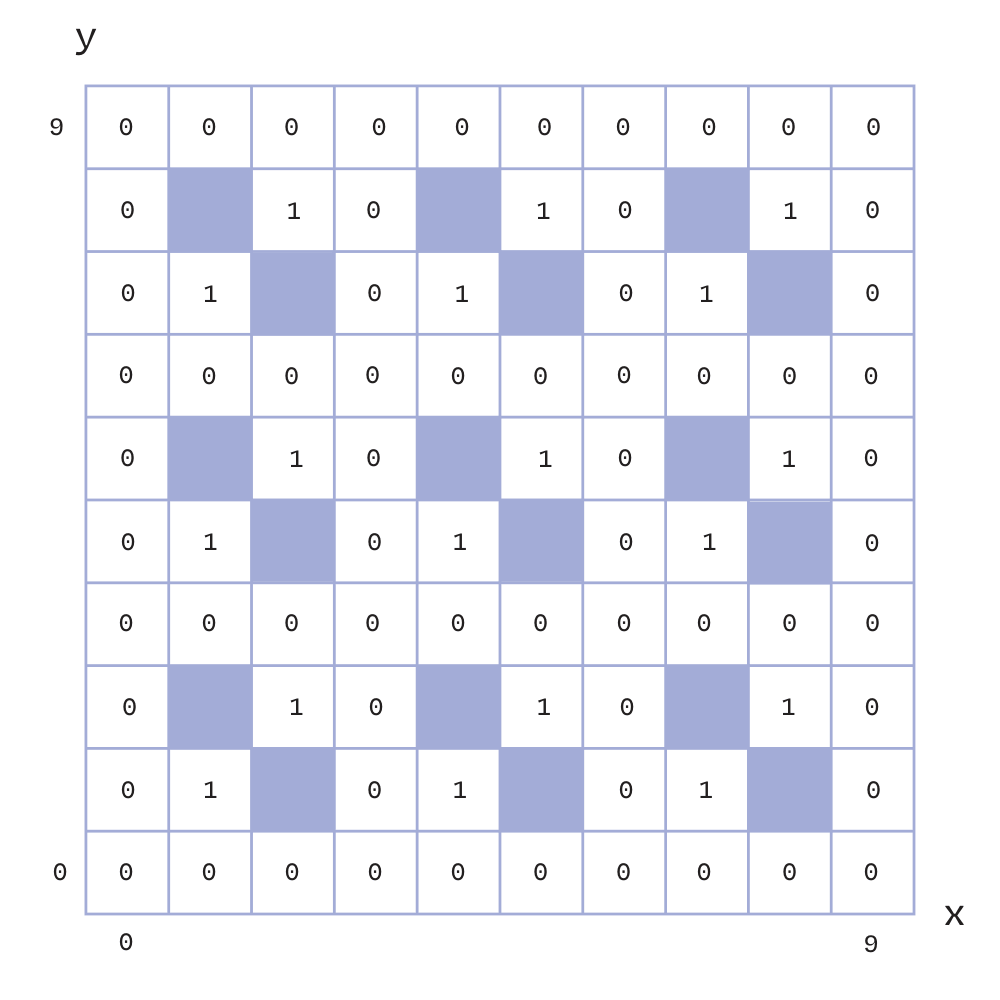
Multiplication — (x × y) mod 3
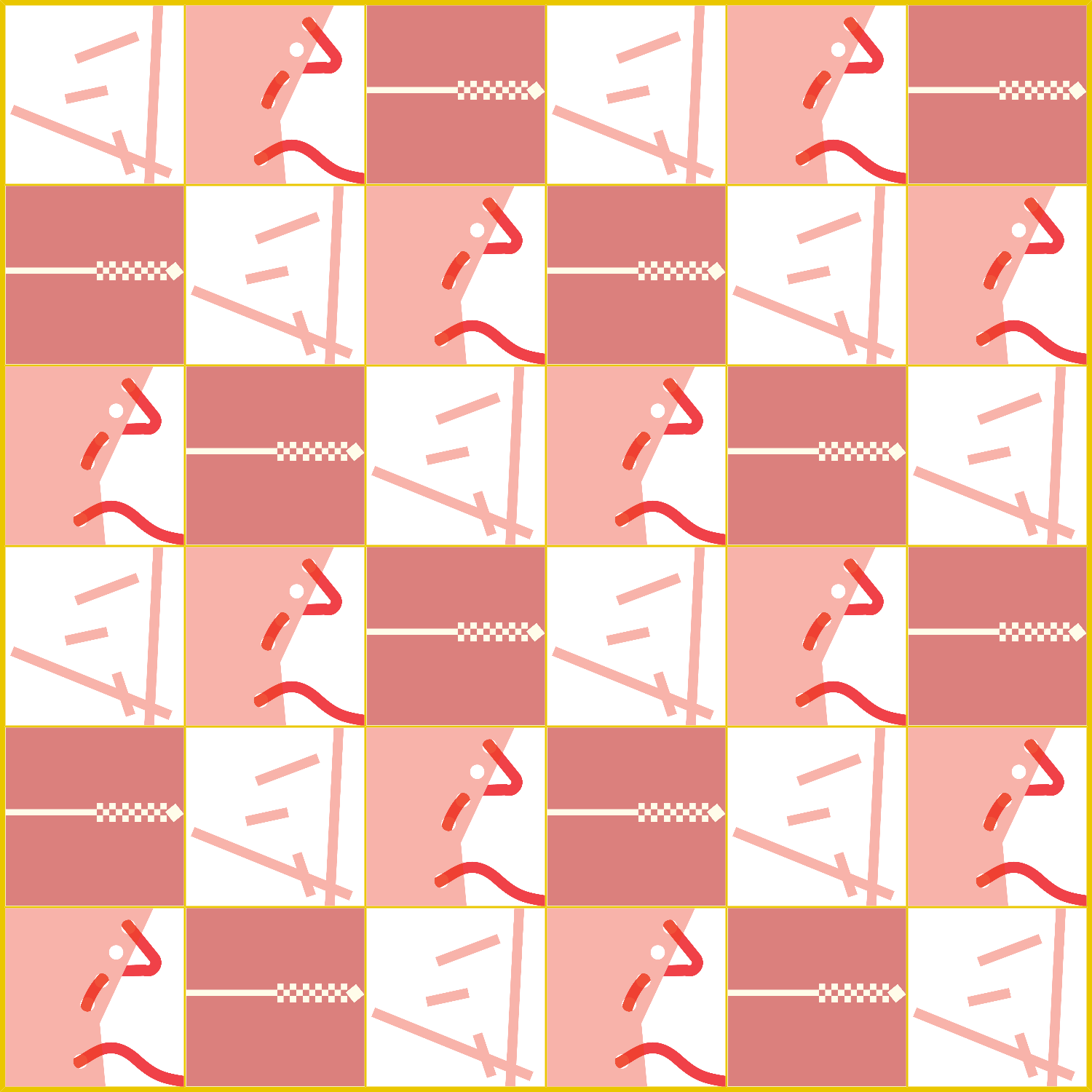
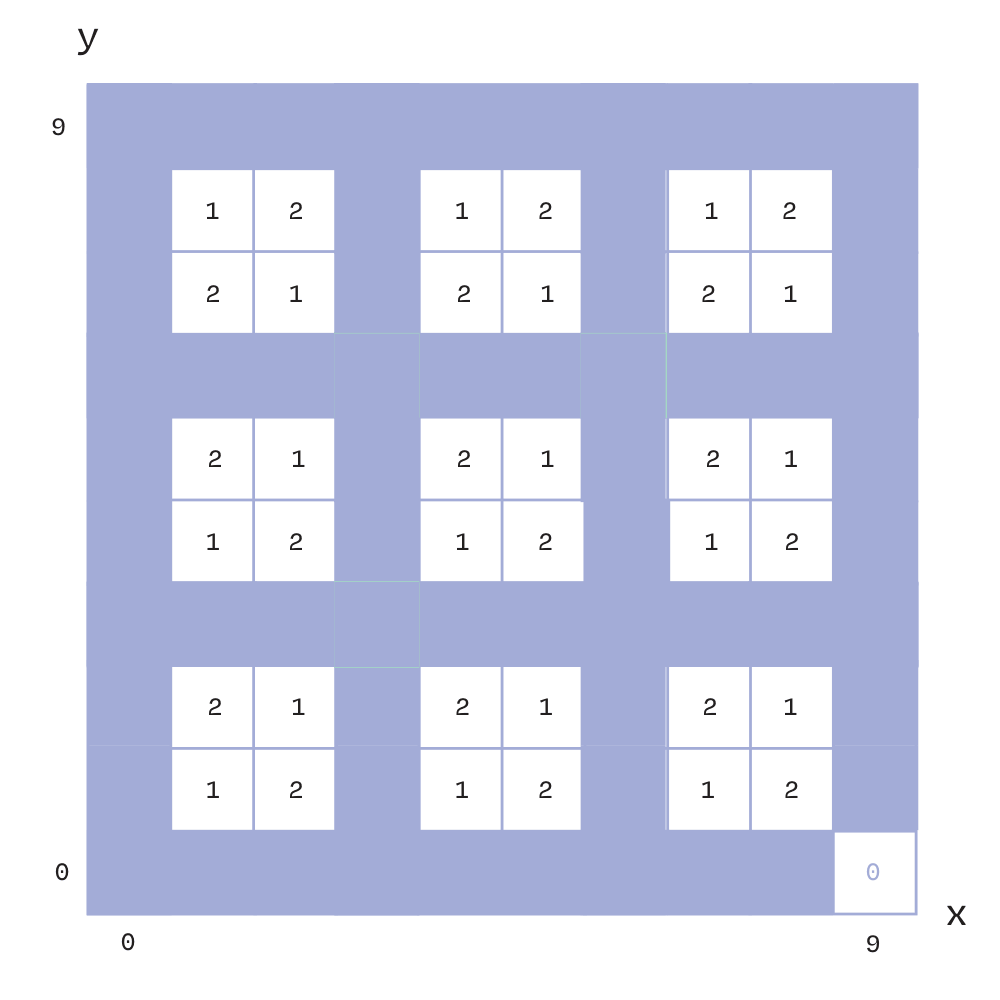
The same grid run through multiplication instead. Changing the operation changes the rhythm of the pattern.
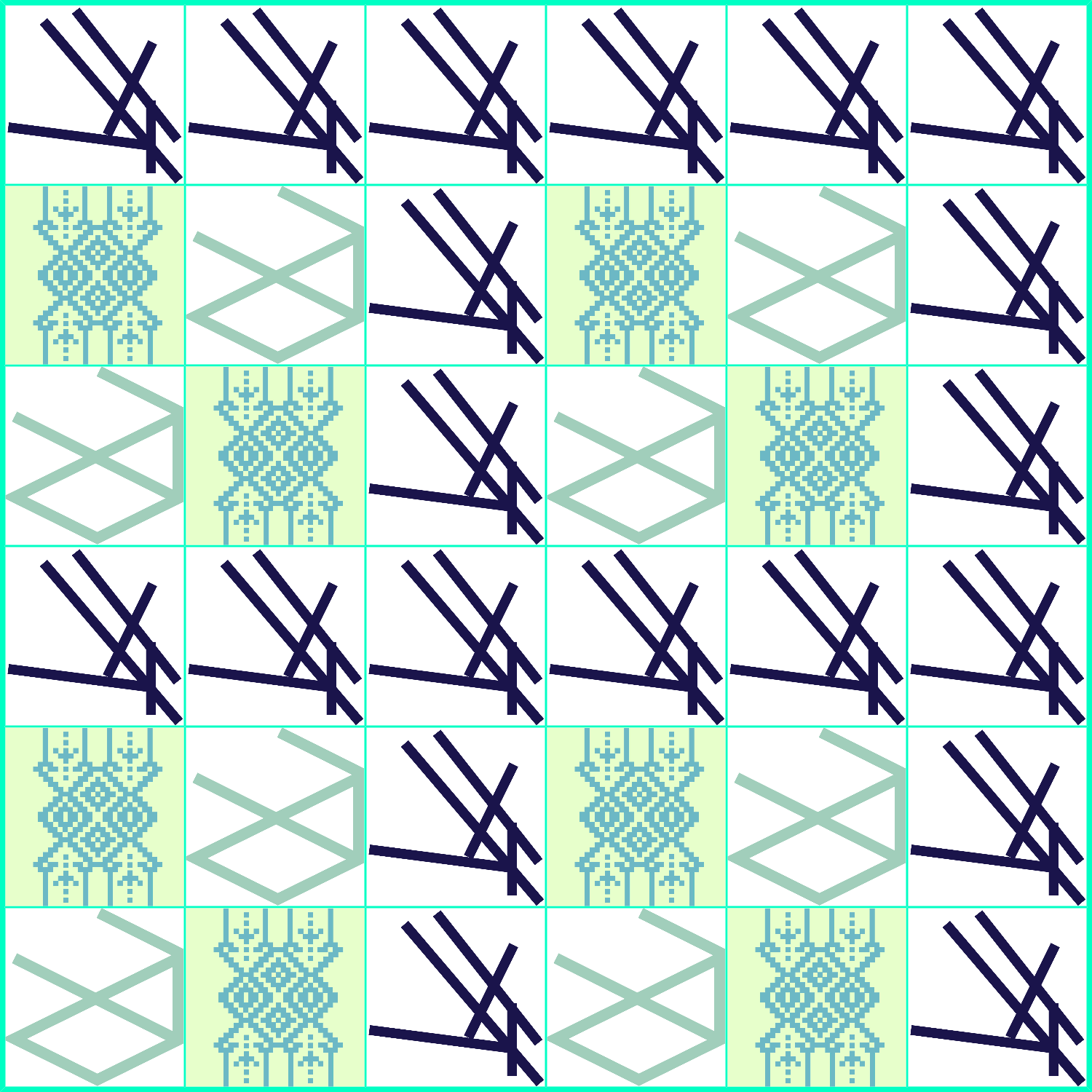
Distance Formula — √(x² + y²) mod 4
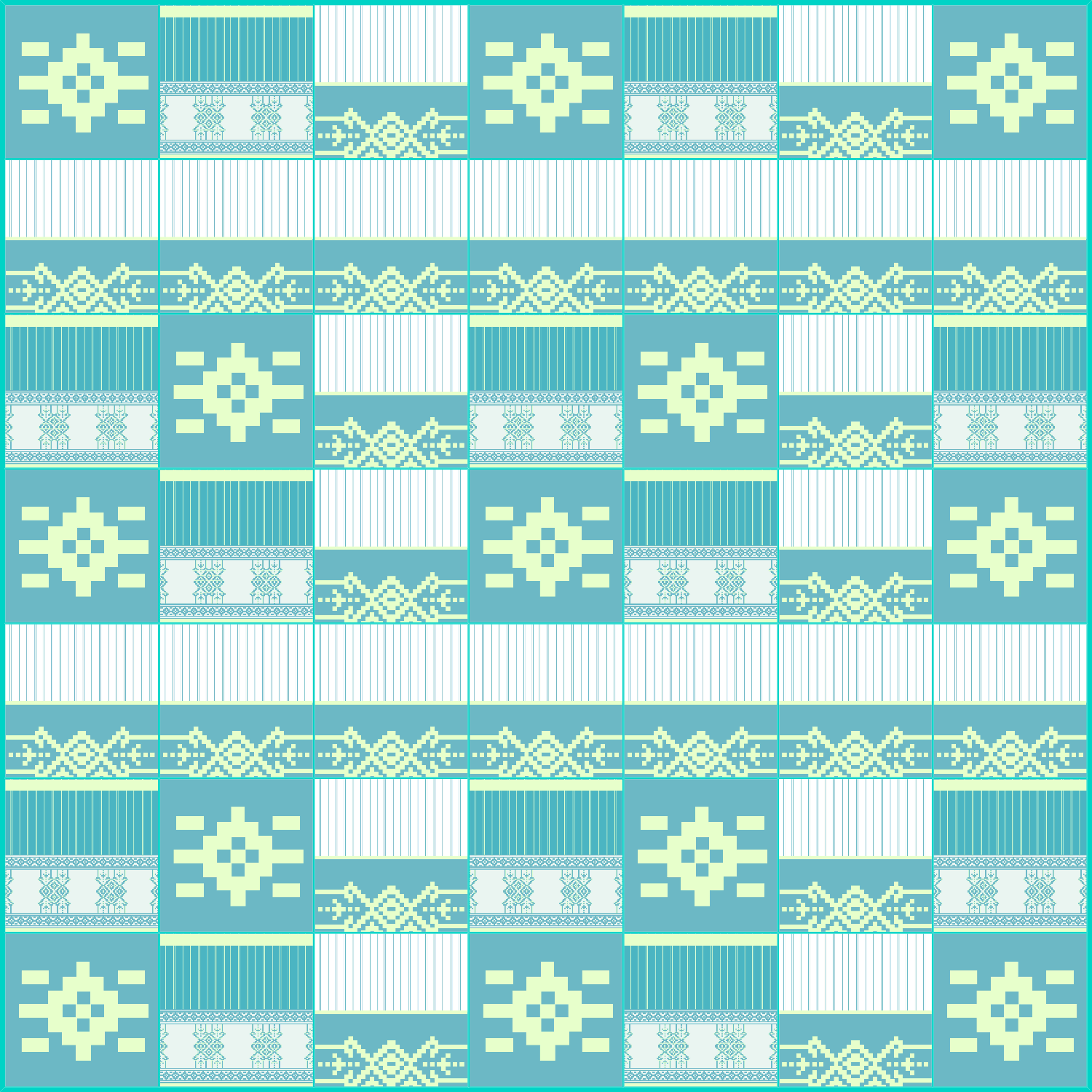
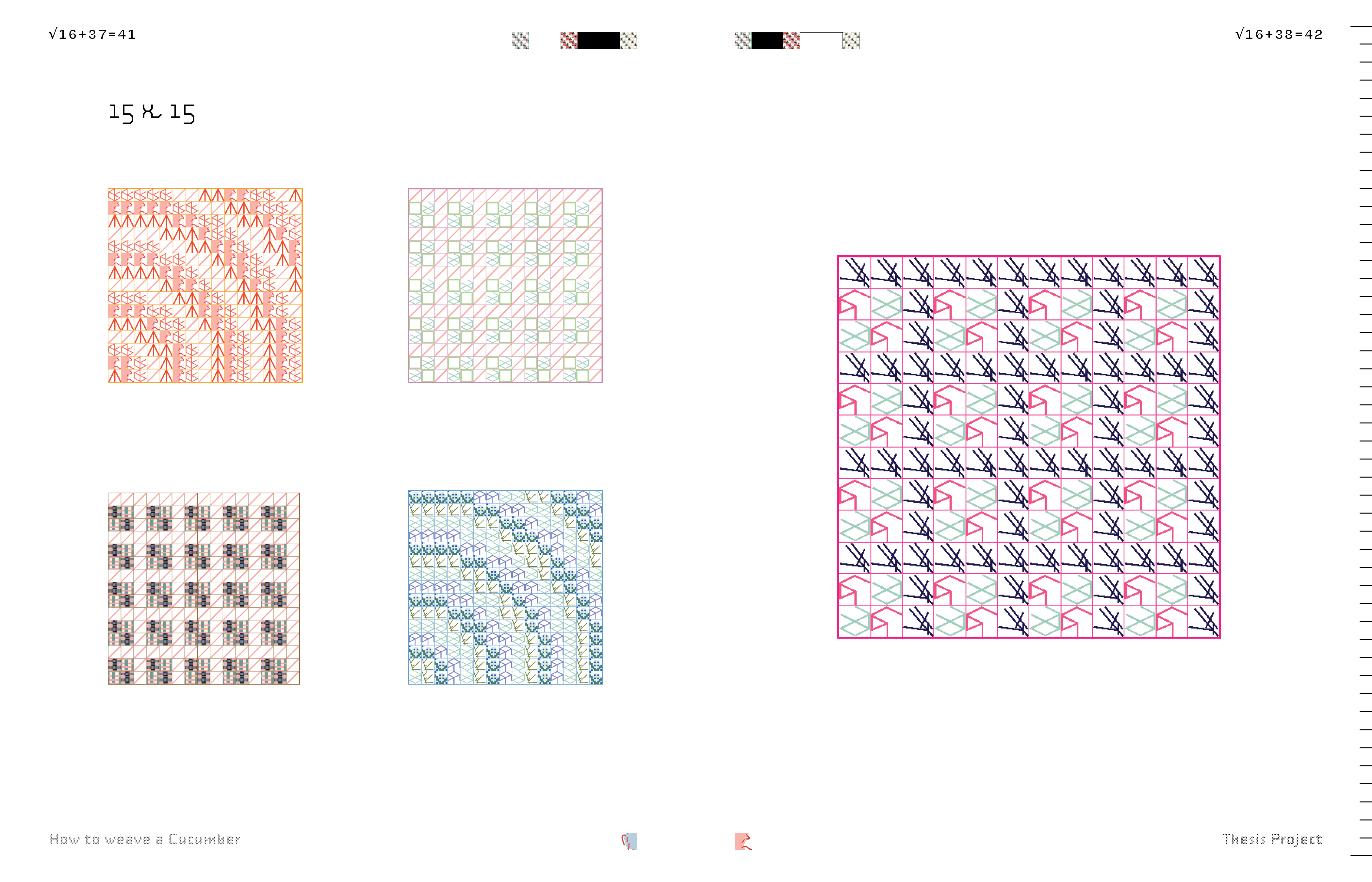
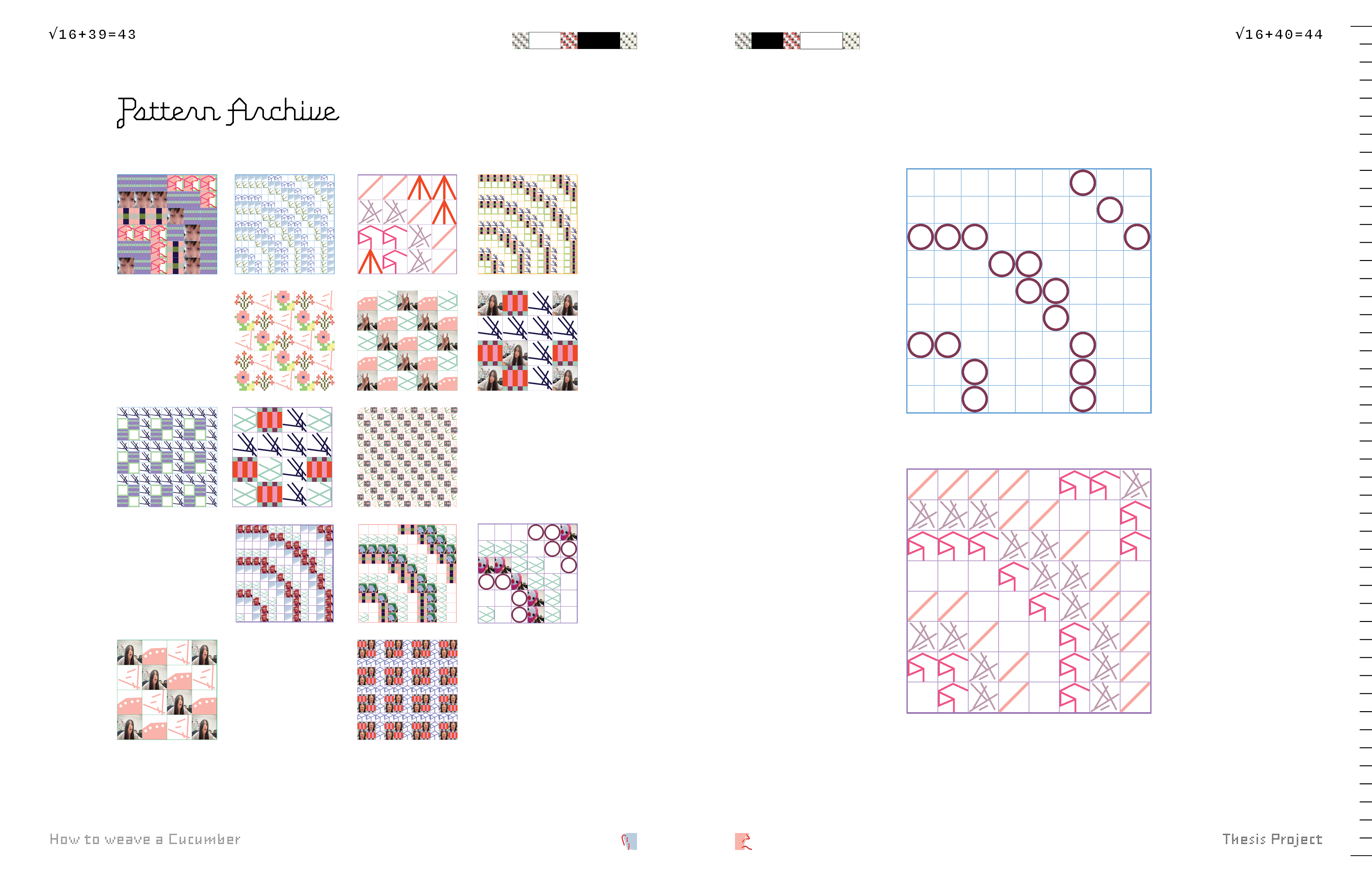
Each cell's distance from the corner, mod 4, gives four remainders and patterns that spread outward in arcs.
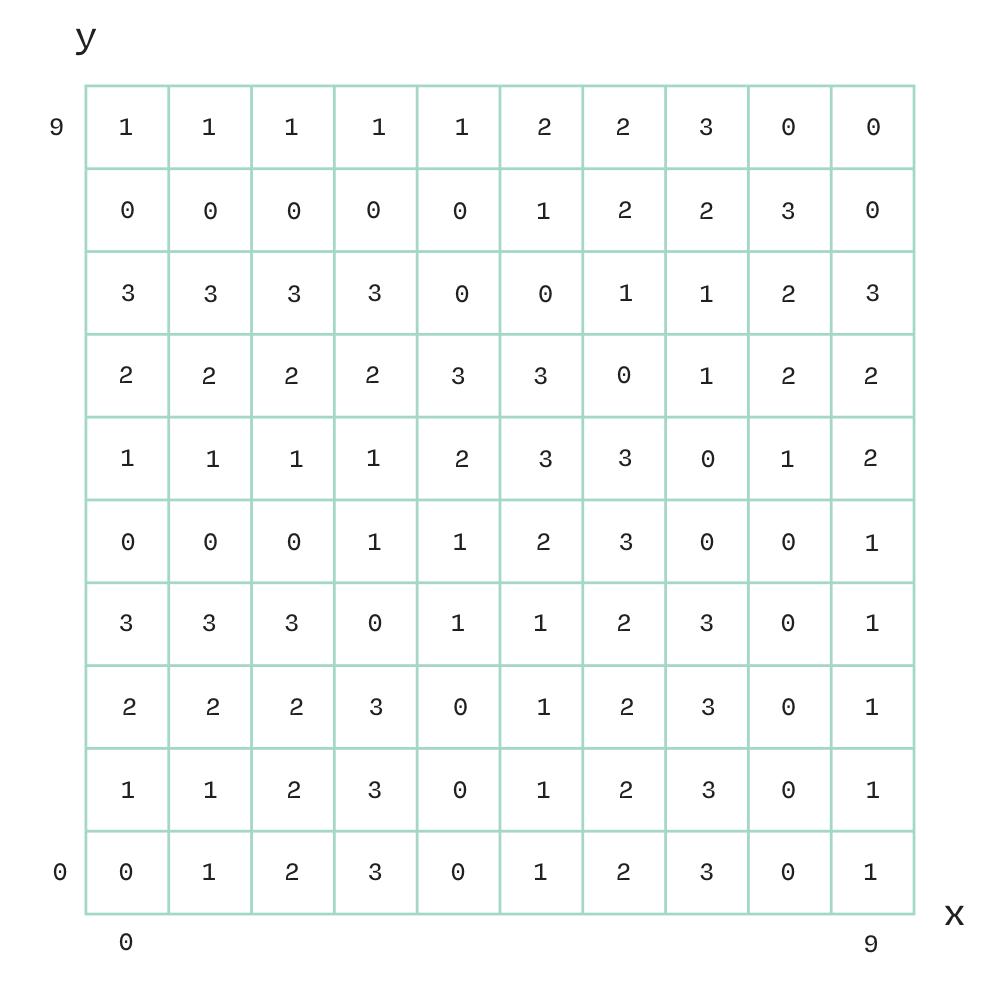
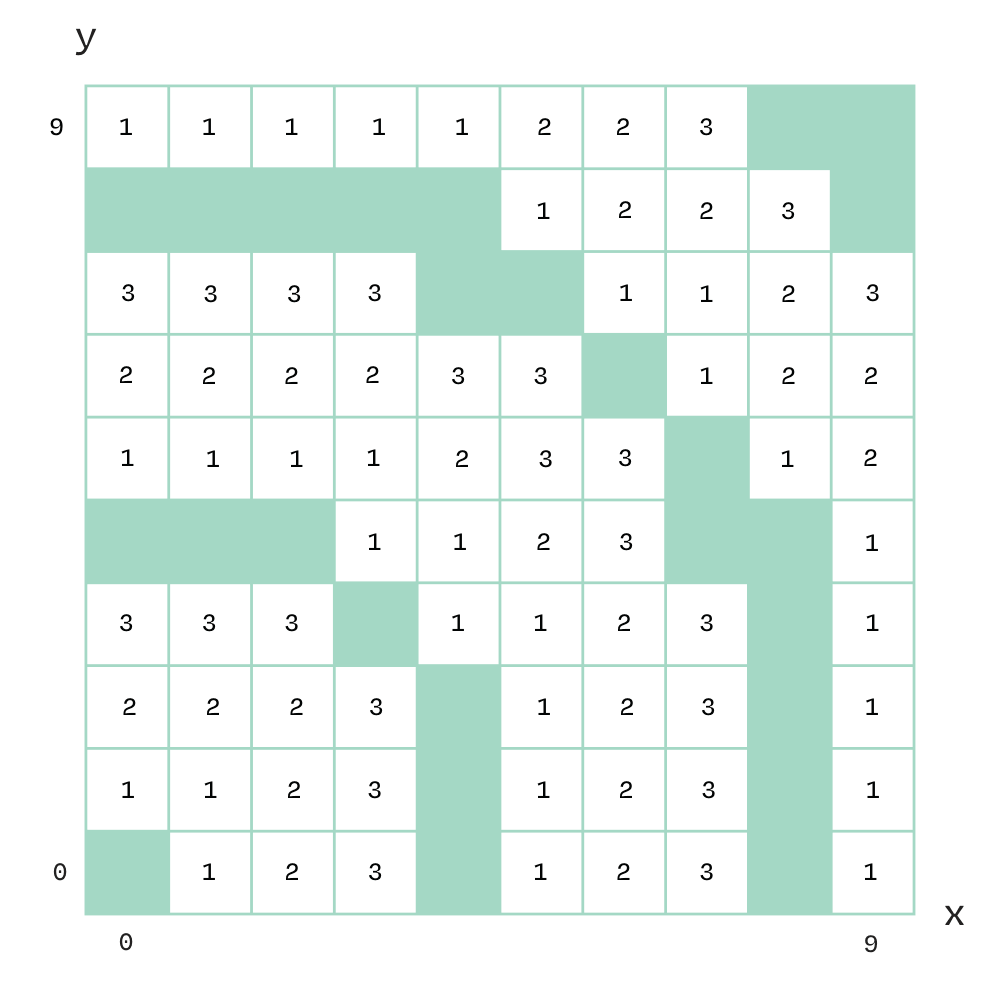
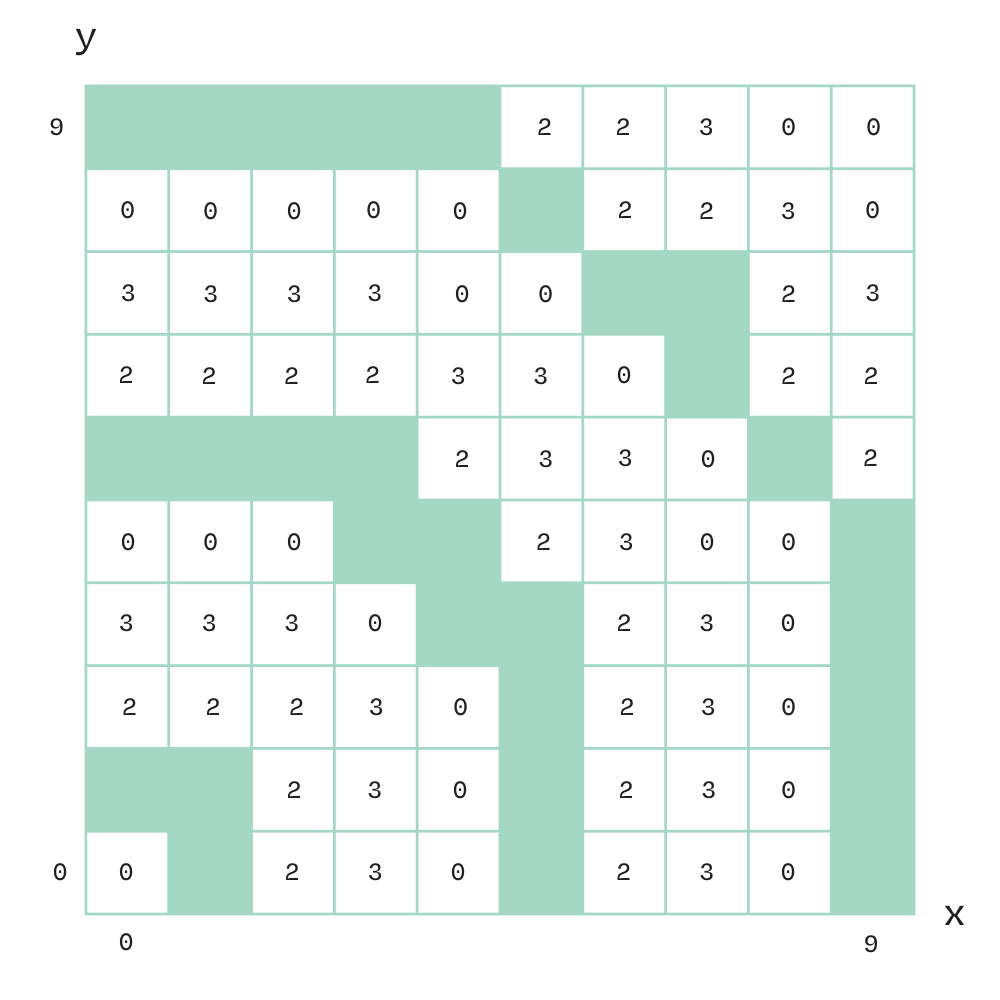
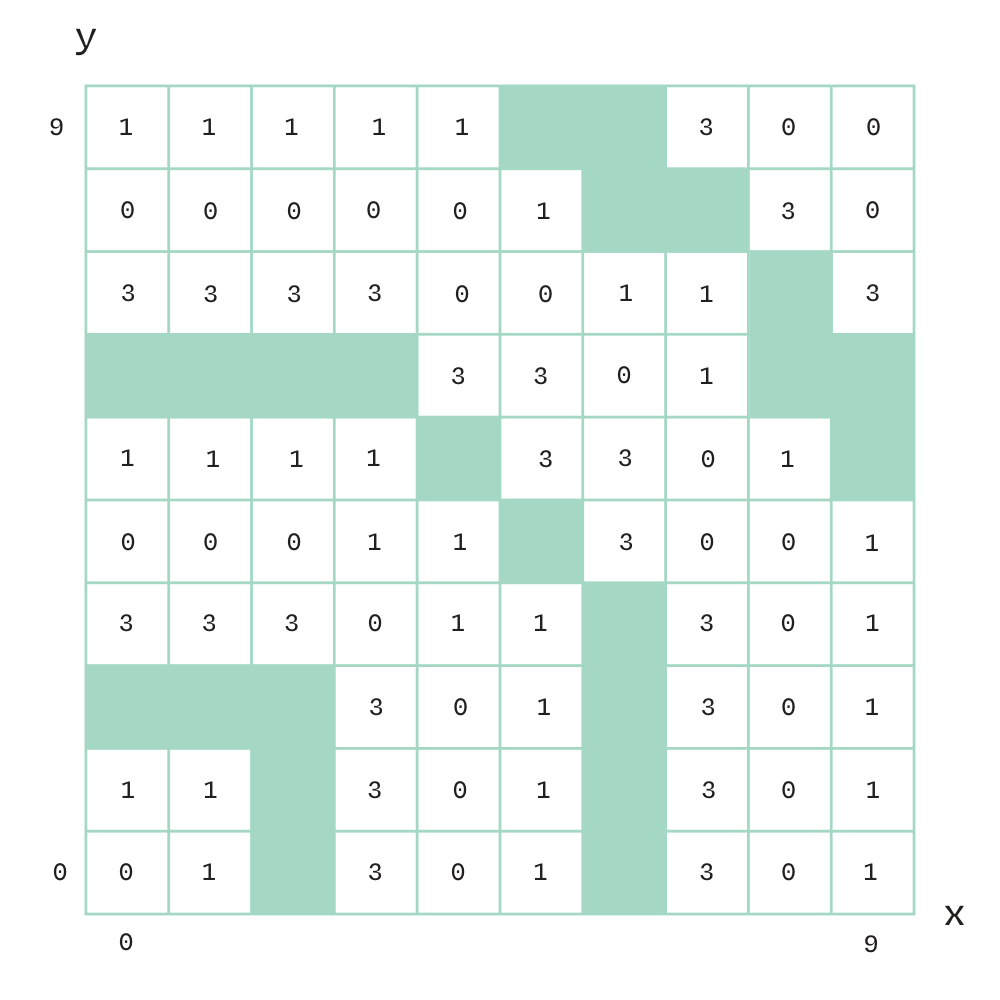
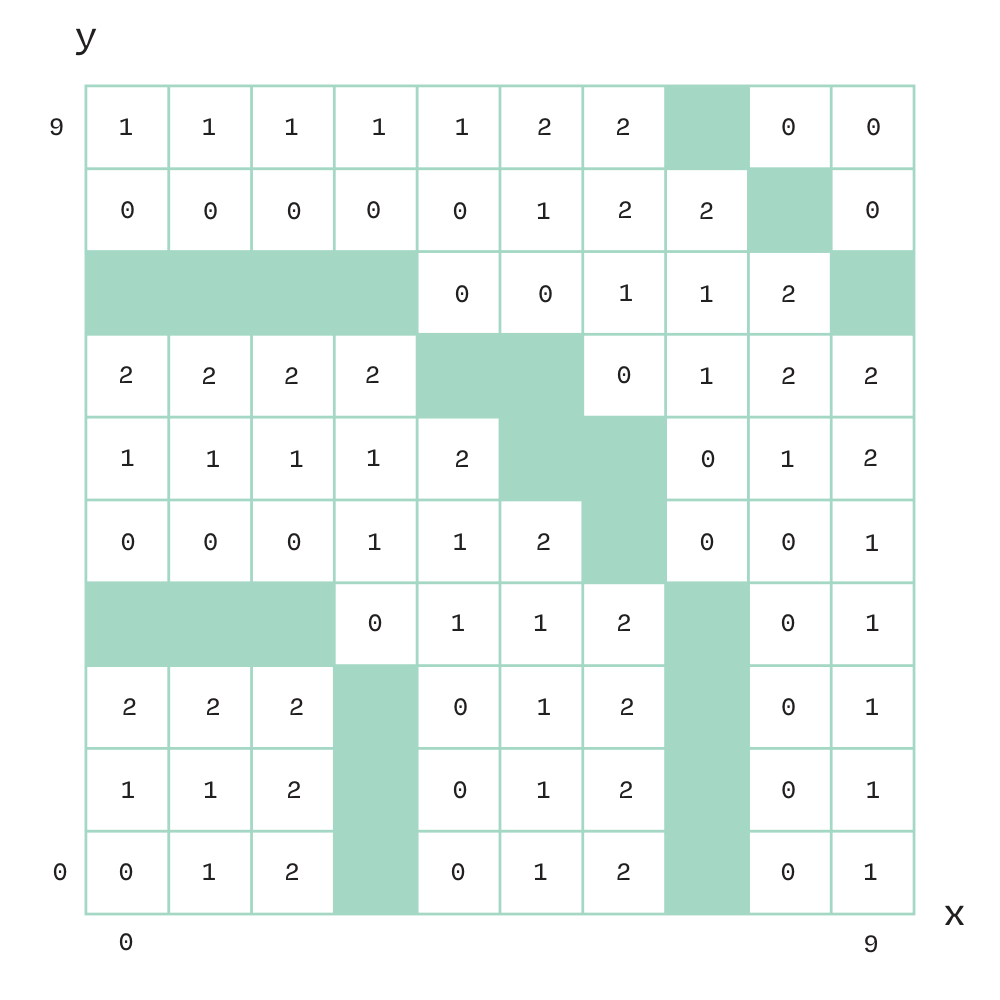
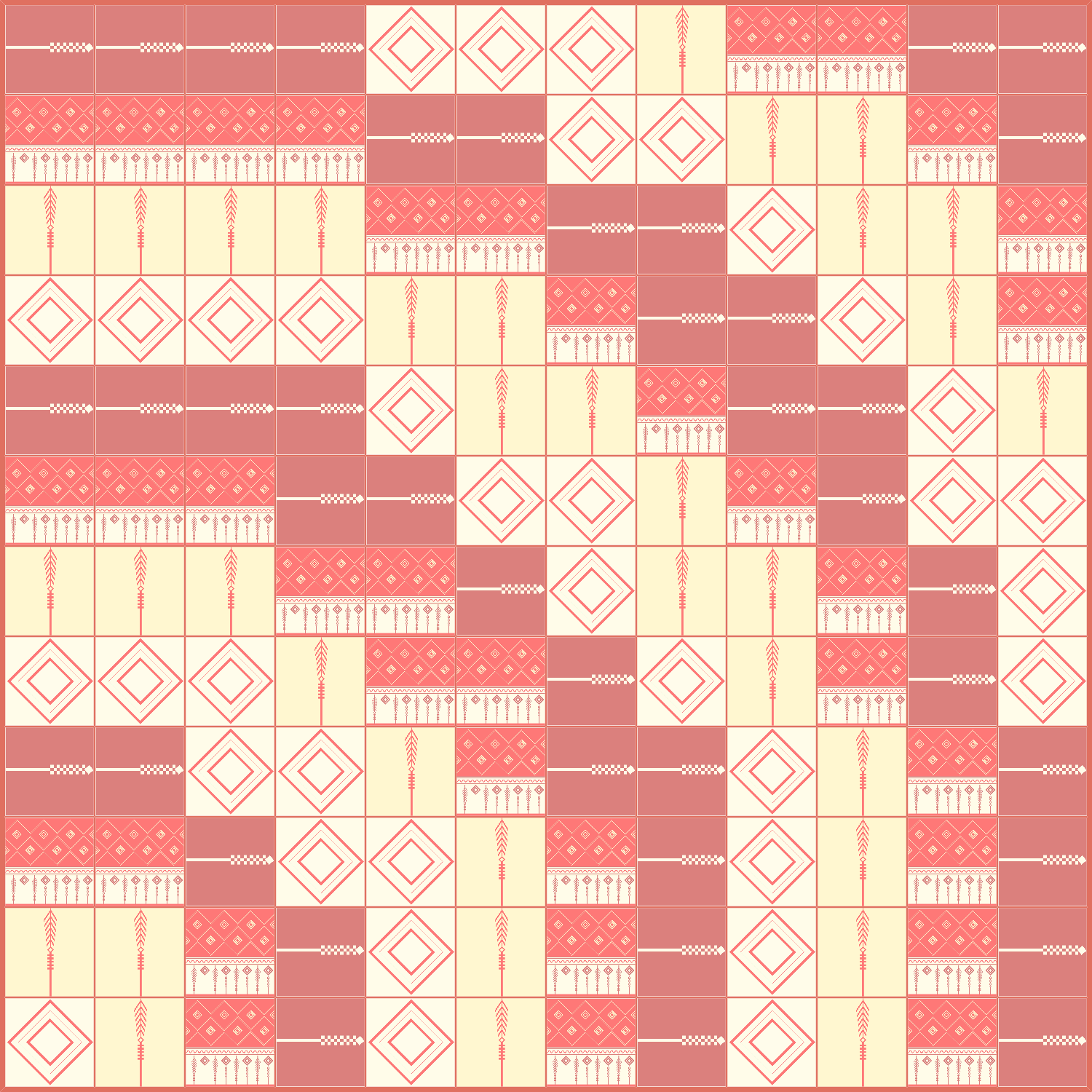
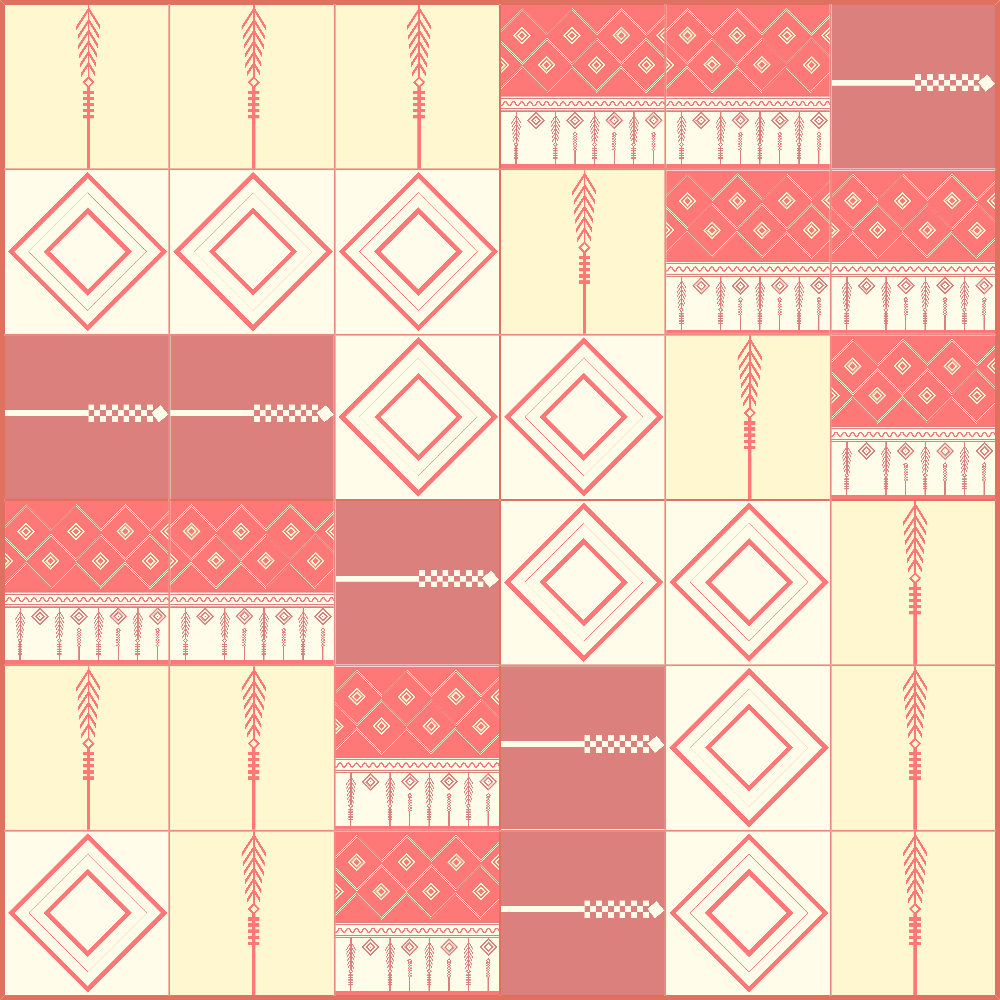
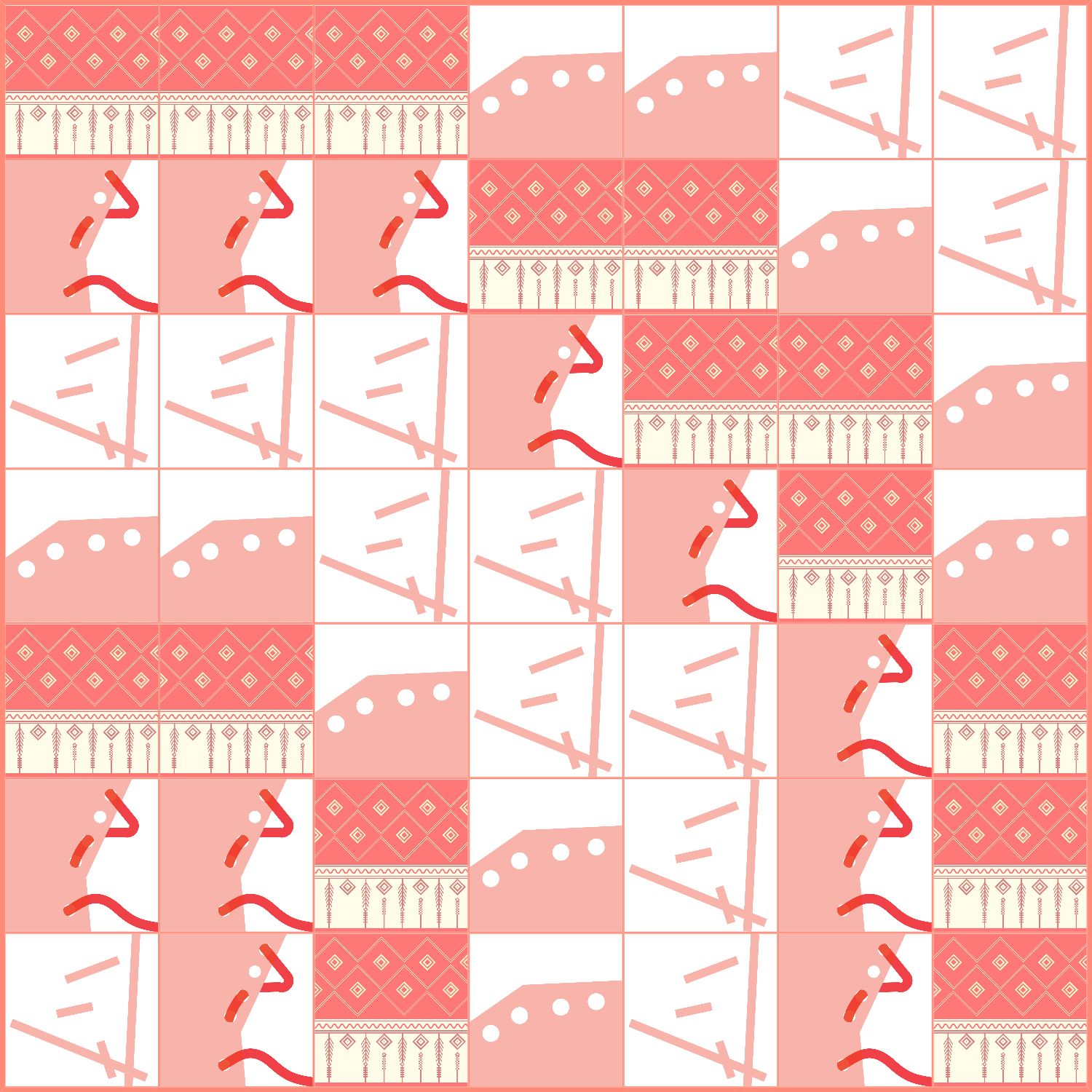
Modular Arithmetic Pattern Website
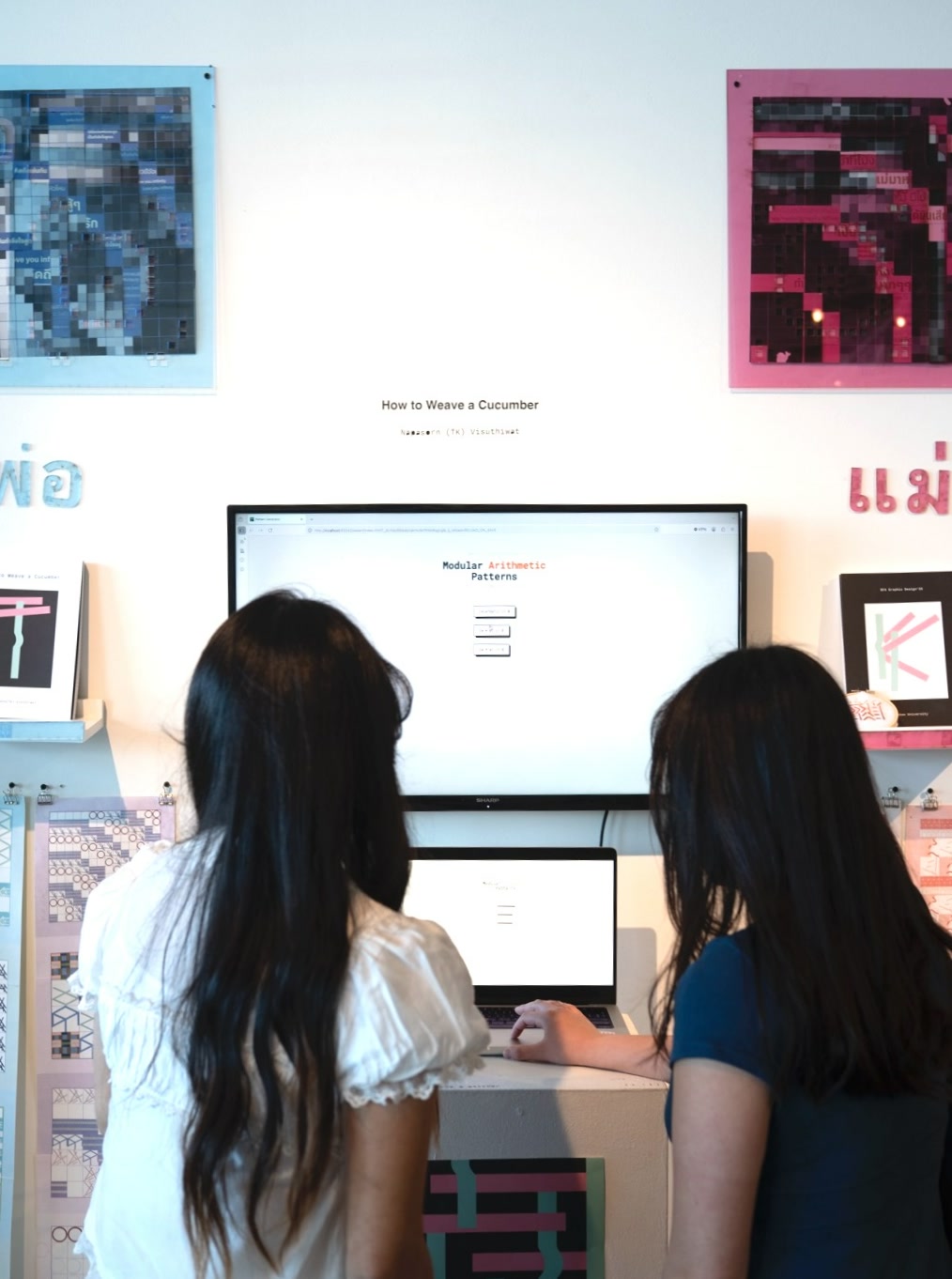
A web tool that generates these patterns live. Choose the rules, grid size and colors, and save designs to a library.
Features
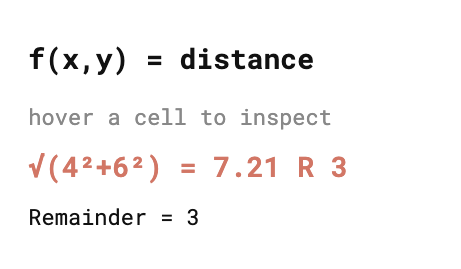
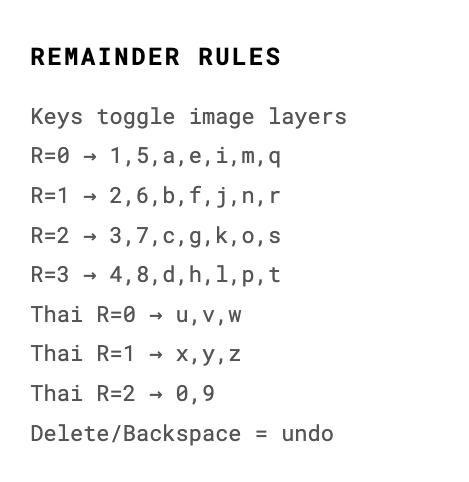

Weaving Distance
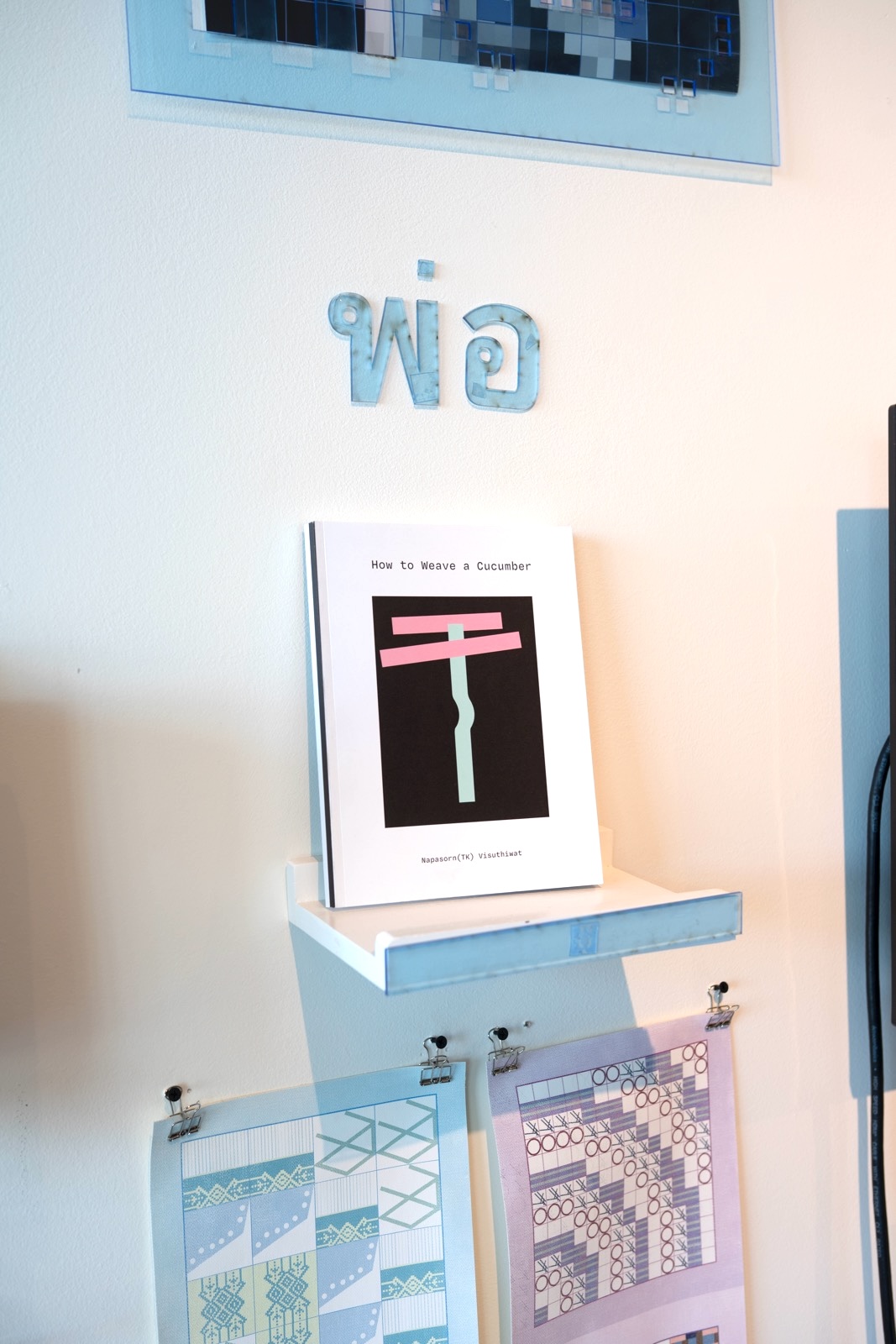
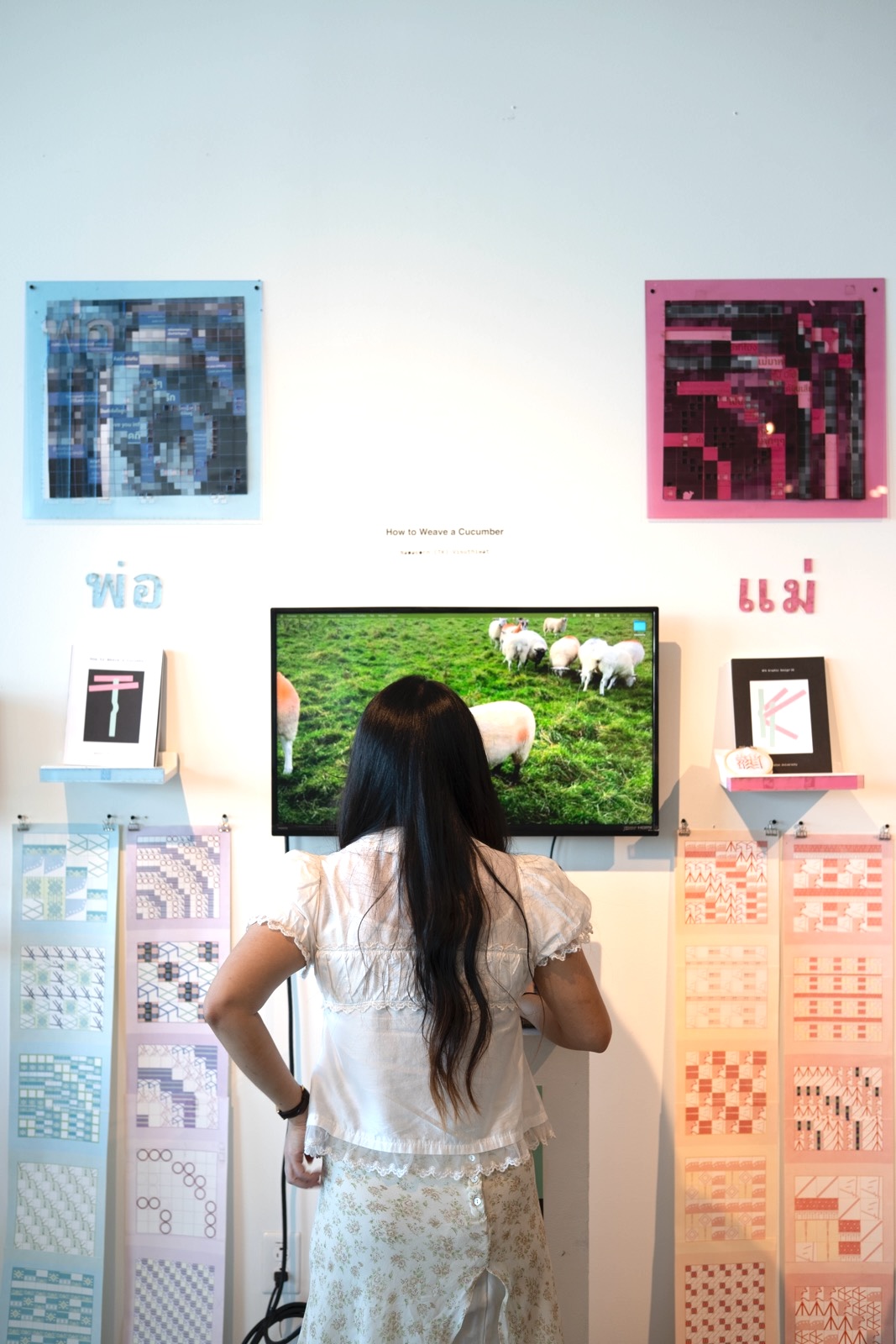
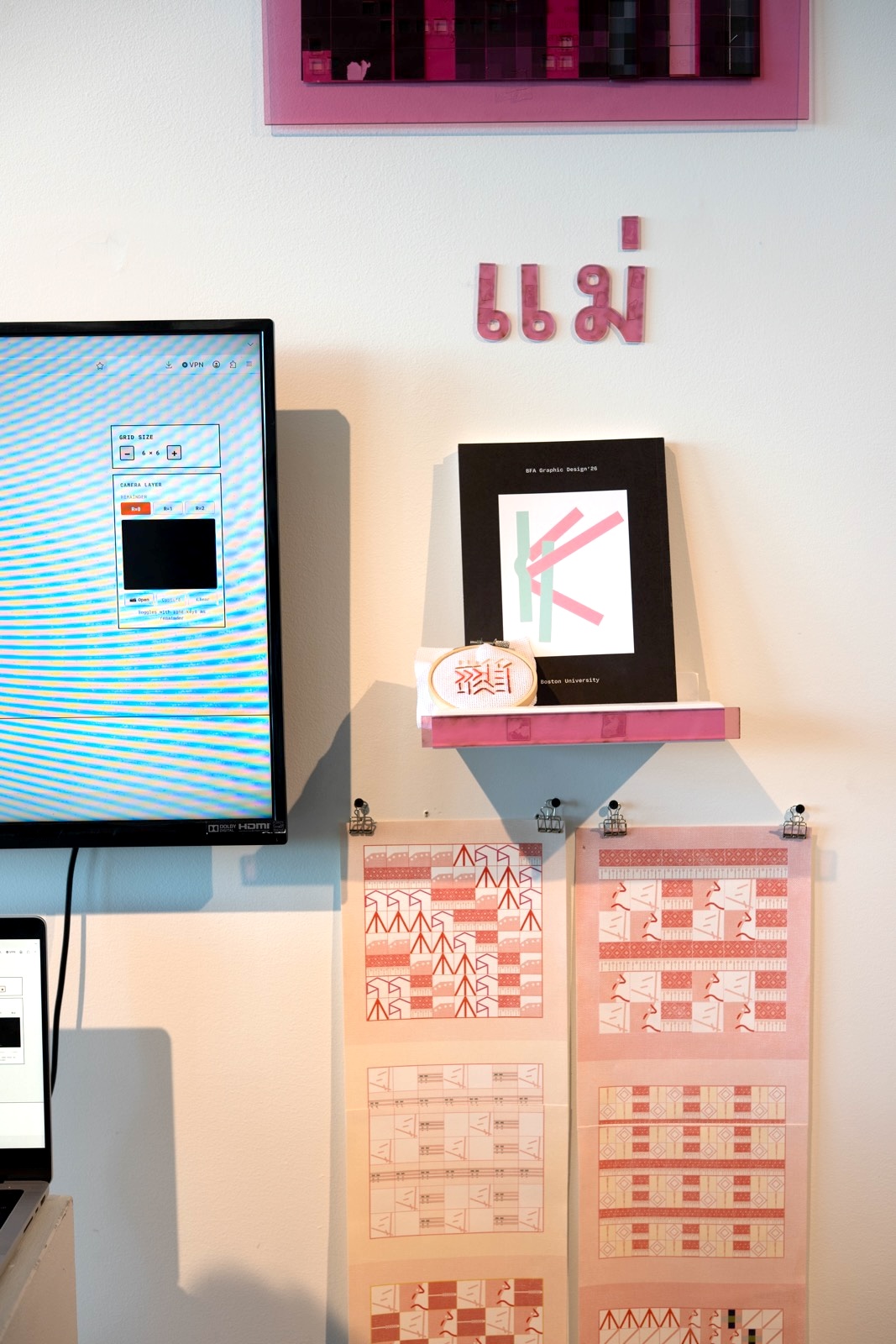
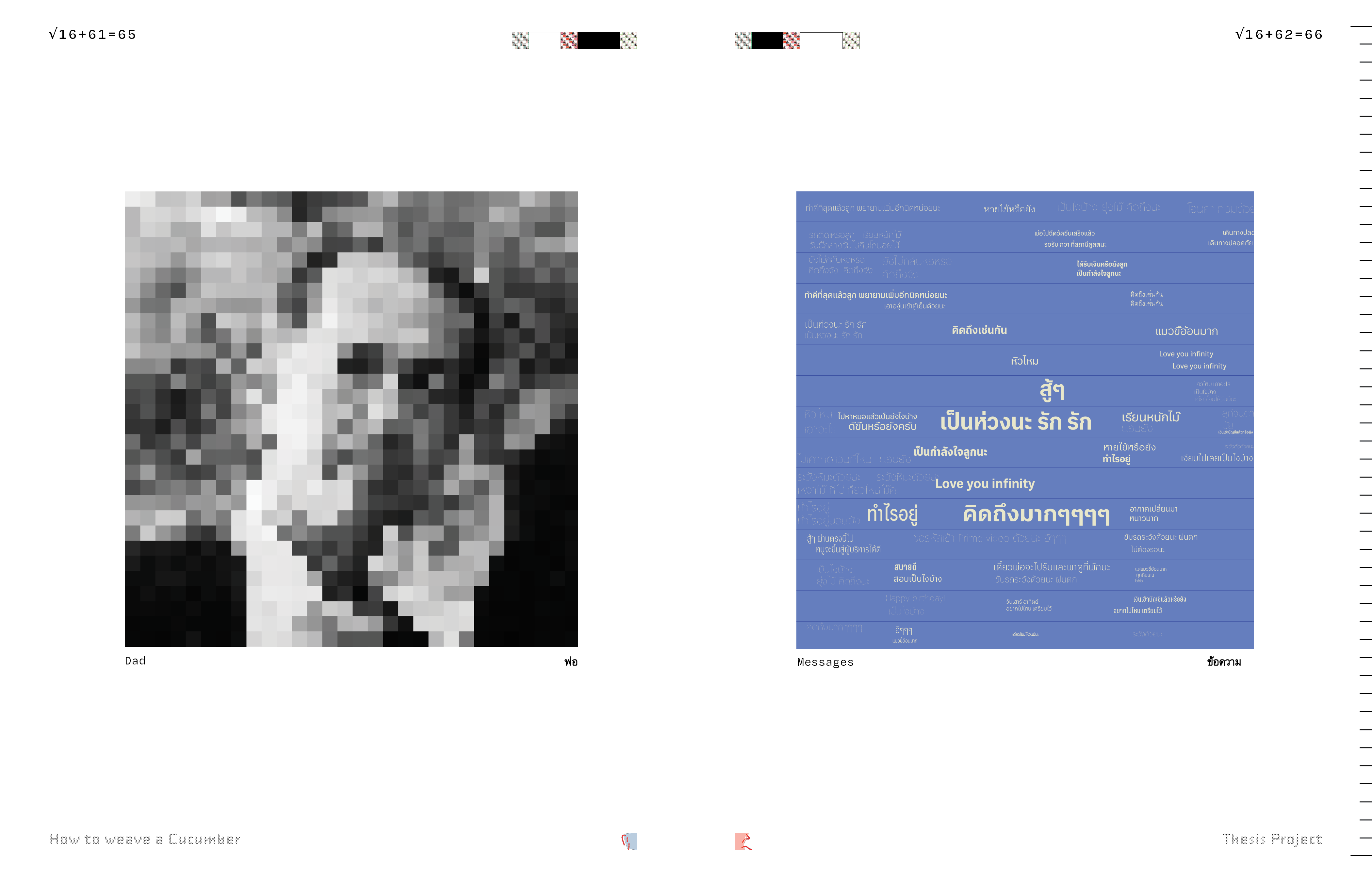
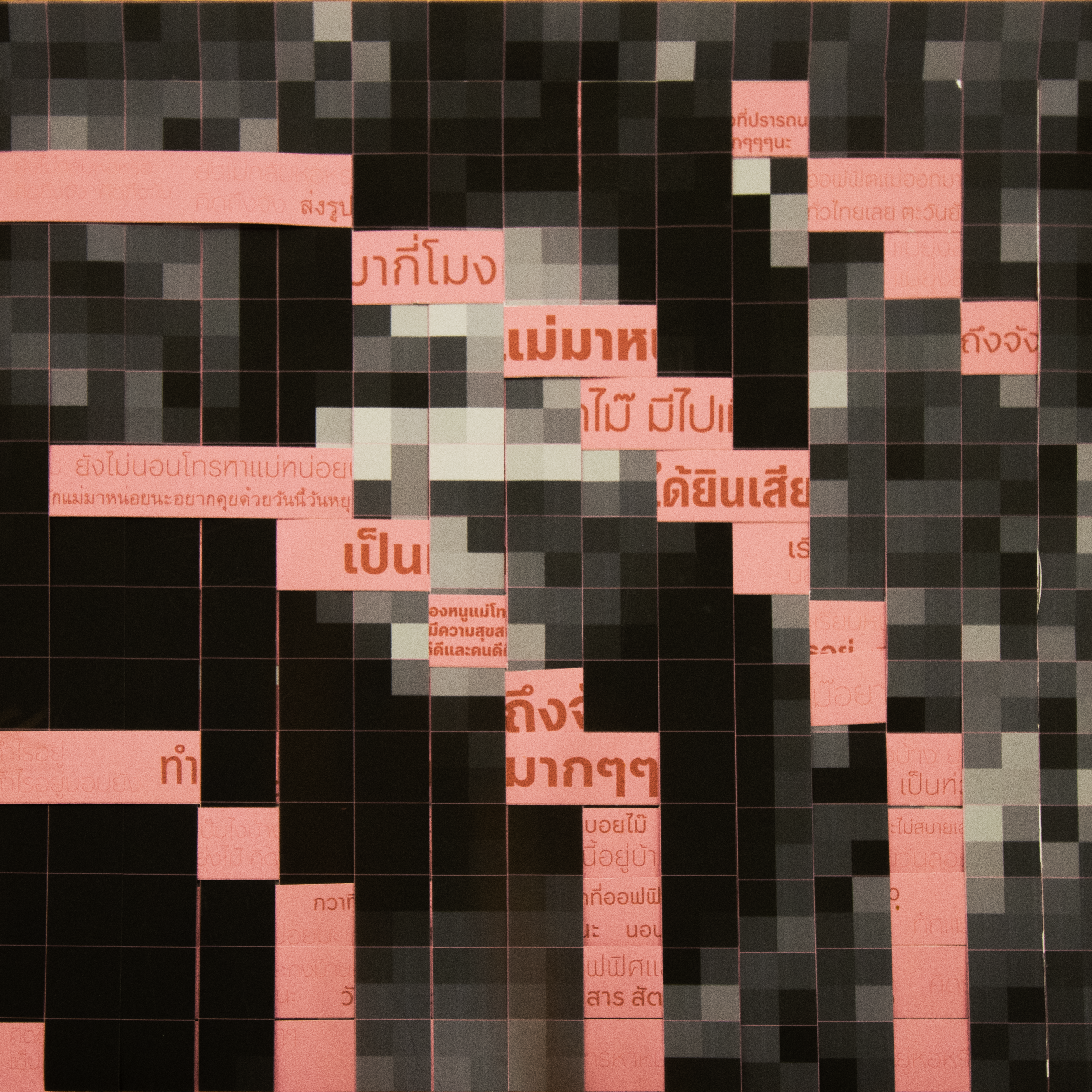
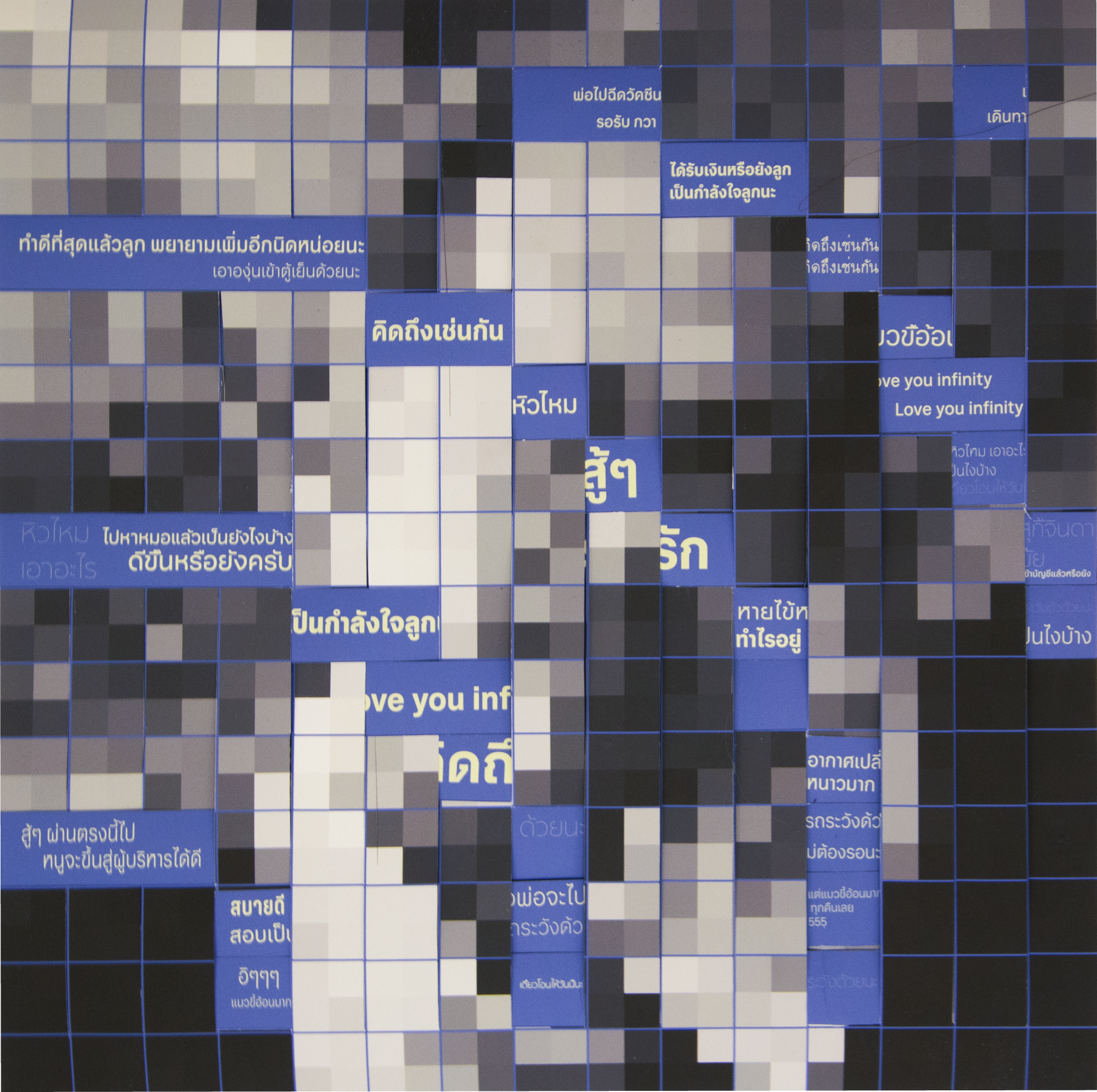
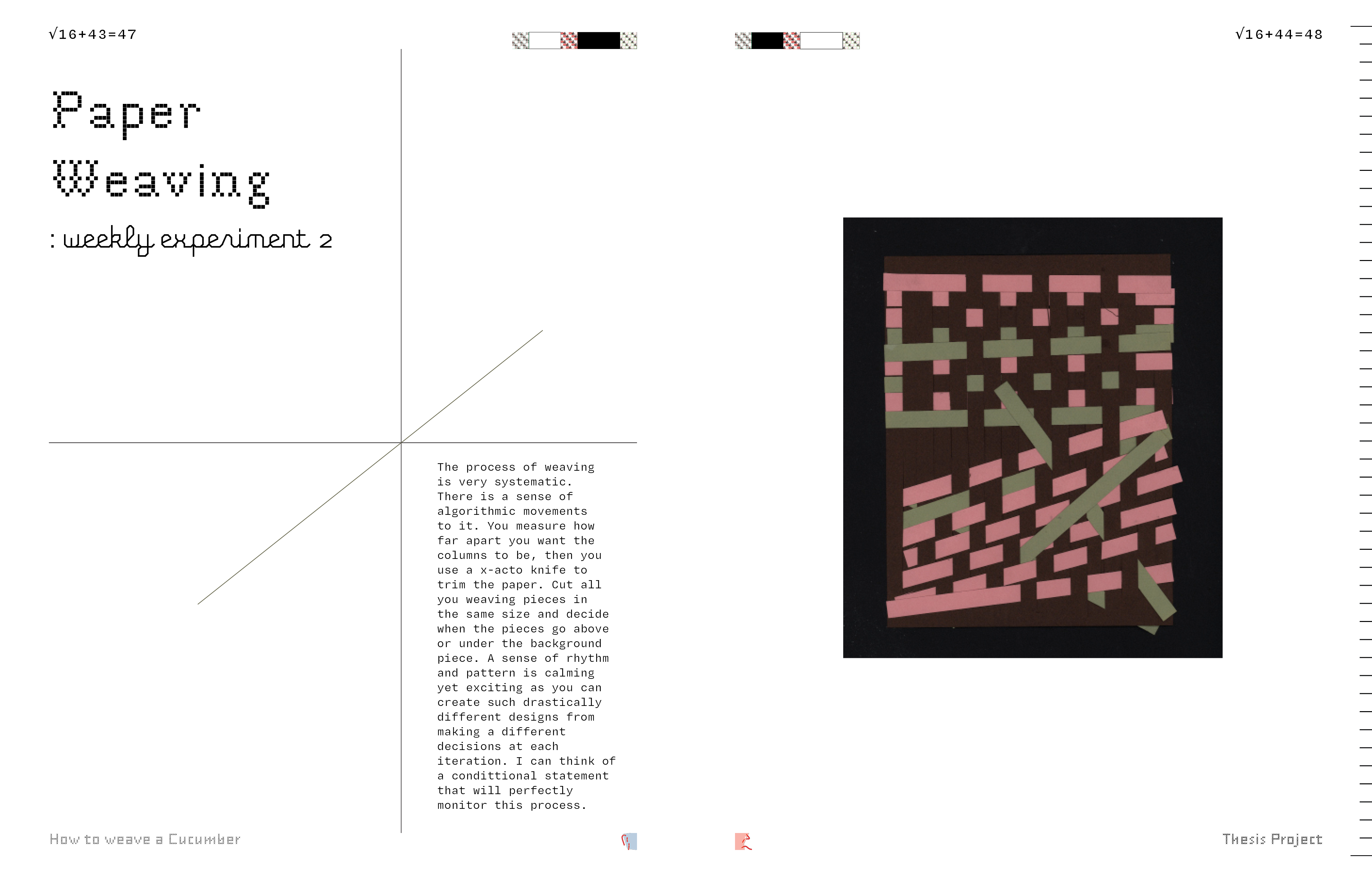
The distance formula made personal. Using a pattern derived from it, I wove paper portraits of my parents, threading their messages to me in Thai through the grid: a way of holding on to family from far away.
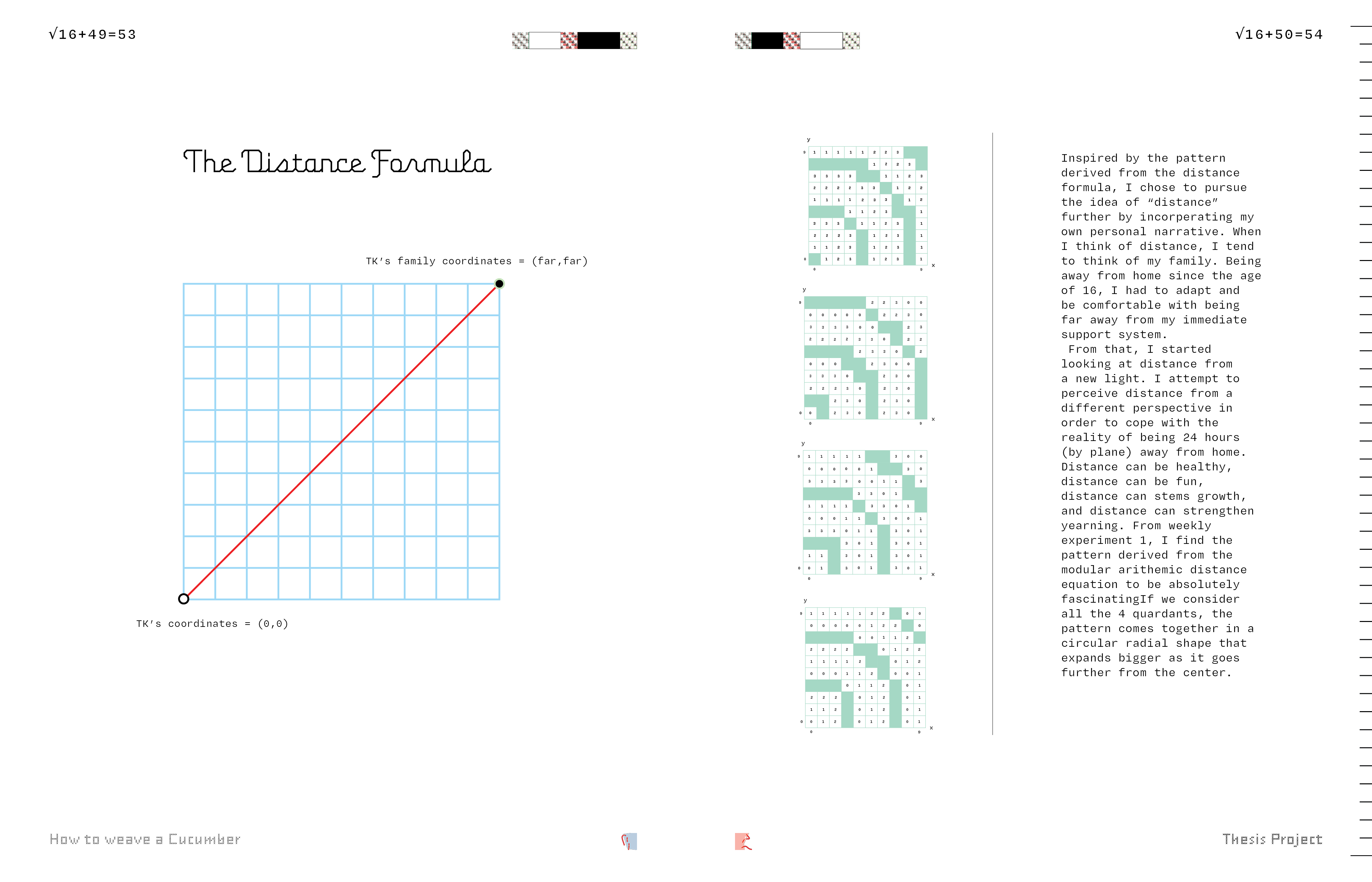
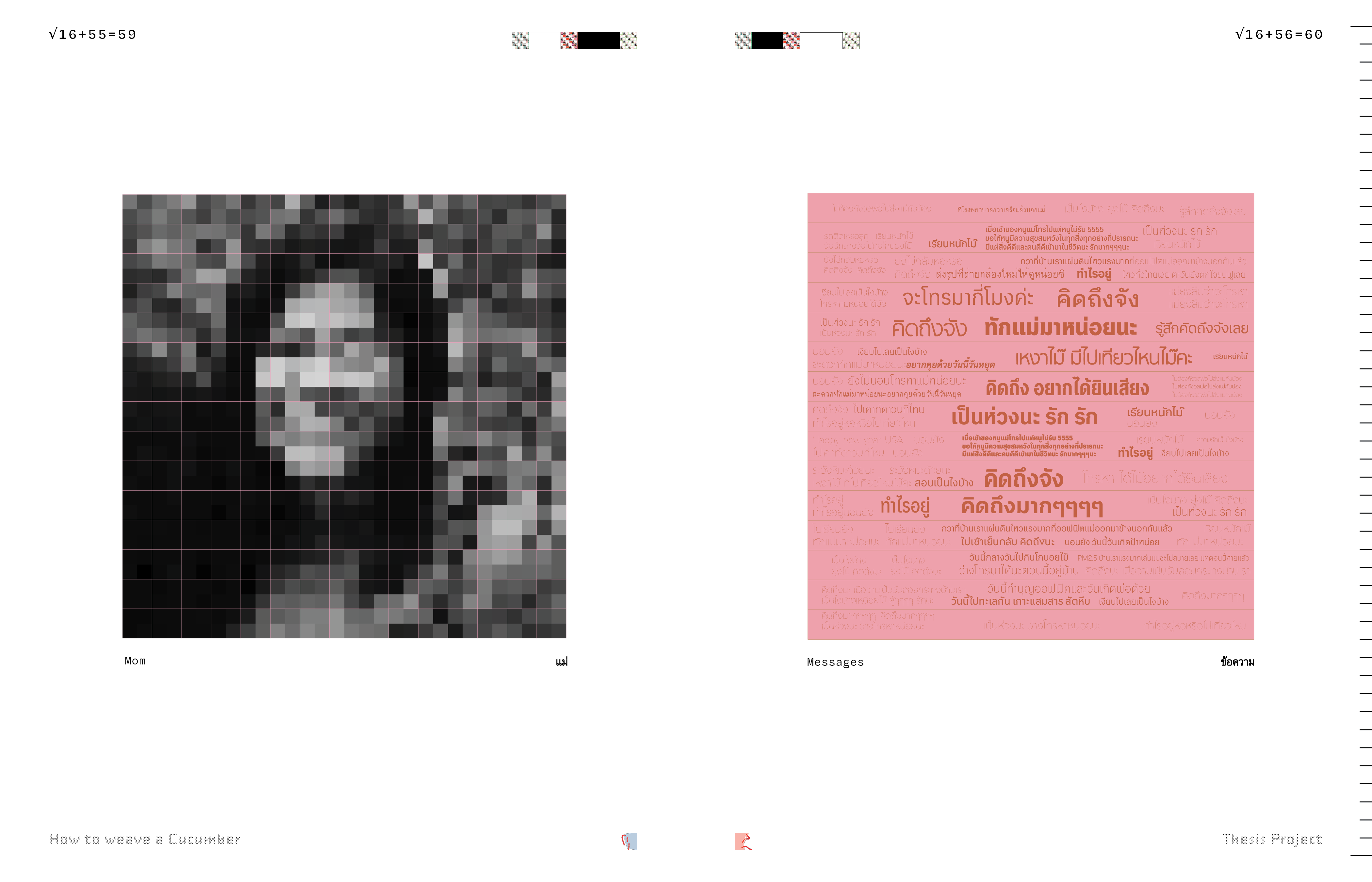
Thesis Book
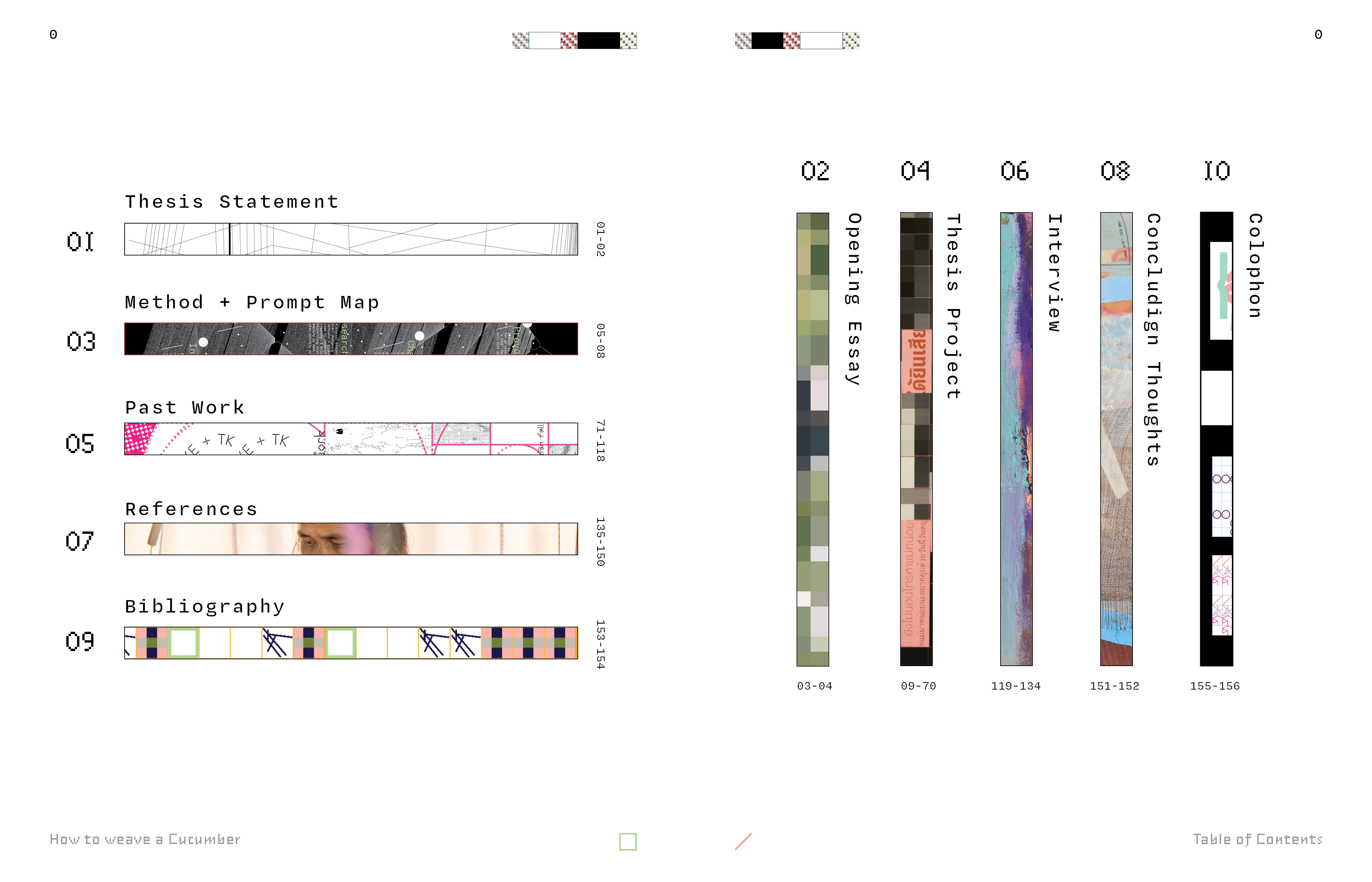
The printed book documenting the research, process and outcomes.
Installation
The final exhibition brought it together: woven portraits, the thesis book, printed patterns and the live pattern website.